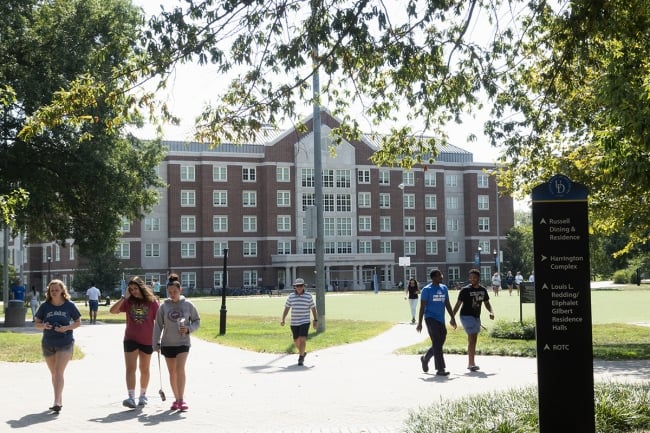
The Department of Justice sued UD to stop the university from offering in-state tuition to noncitizen students and to prevent future policies that might benefit them over citizen students.
aimintang/iStock/Getty Images
The Department of Justice on Thursday filed its 26th lawsuit targeting policies that allow undocumented students to pay in-state tuition rates. The lawsuit, against the University of Delaware, is the first of these DOJ cases to target an individual institution rather than a state or municipal government.
The lawsuits have already ended in-state tuition for undocumented students in Kansas, Kentucky, Illinois, Nebraska, Oklahoma and Texas, impacting an estimated 180,000 undocumented students. Florida pre-emptively eliminated its policy in February 2025 and recently barred undocumented students from enrolling in any selective public university. At least 220,000 other undocumented students live in states where litigation is ongoing, according to data from the Higher Education Immigration Portal.
The complaint against the University of Delaware specifically seeks to prevent the institution from offering in-state tuition to undocumented students, even if they are lawfully present in the United States, and stop them from enacting any new policy that would “favor illegal aliens over U.S. citizens,” according to a news release.
The DOJ has argued that granting in-state tuition rates to undocumented students disadvantages U.S. citizen students and incentivizes illegal immigration.
Advocates disagree, citing concerns about individual student prosperity and the effects a less educated workforce could have on the economy.
Thomas A. Saenz, president and general counsel at the Mexican American Legal Defense and Education Fund, has said the lawsuits are part of a “nationwide campaign and assault by the administration on the rights of these students.”
MALDEF previously sought to intervene in lawsuits on behalf of students in Kansas, Kentucky, Oklahoma and Texas, with mixed results. In September, Saenz said that MALDEF and other advocates were considering petitioning the Supreme Court to take up the issue.