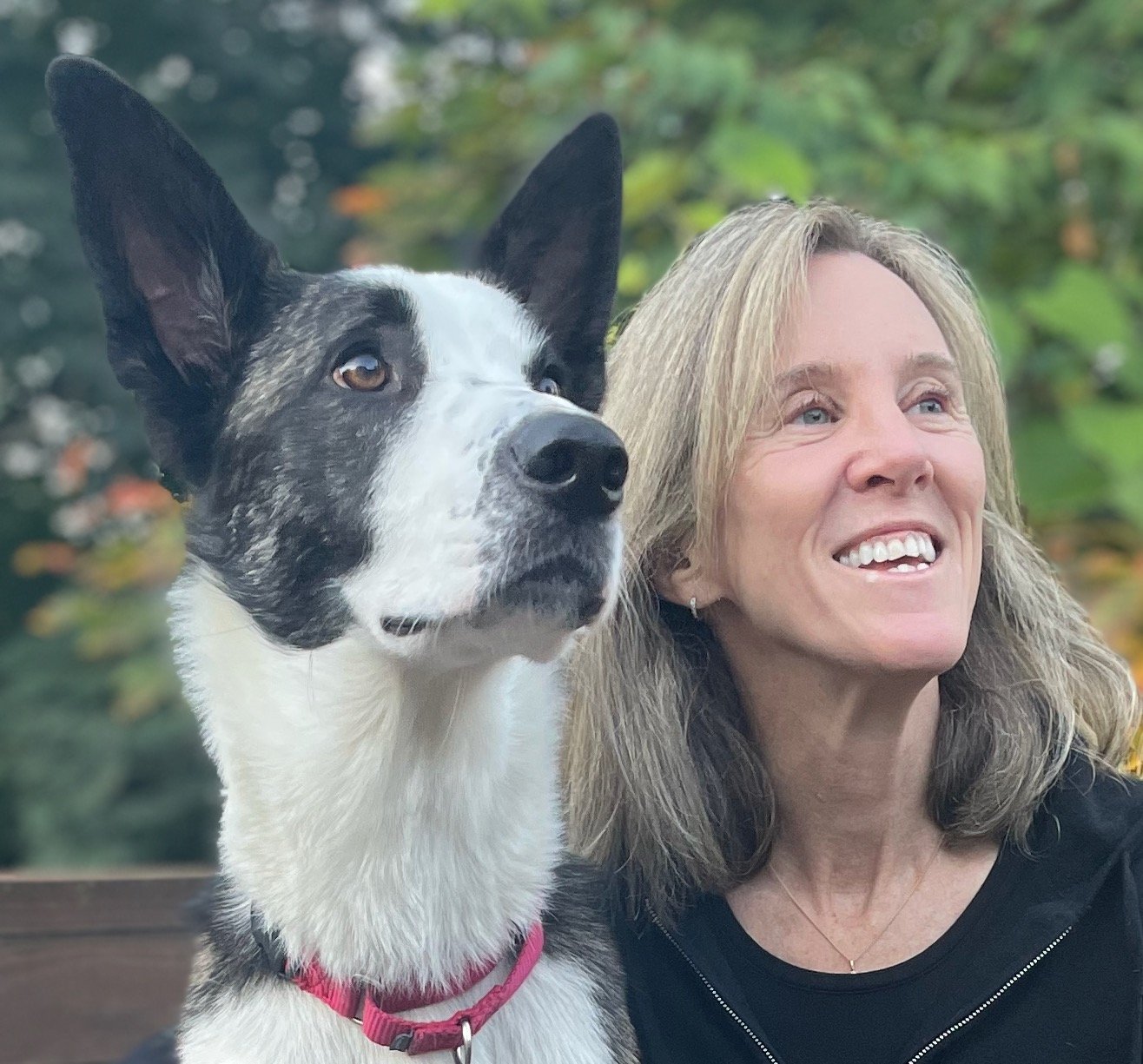
Alena Selezneva
Mint chocolate chip ice cream, pretty much any brand. Mountain runs with my husband and dog. Joan Didion’s sentences (that make me feel I will never be a real writer). Catherine O’Hara on Schitt’s Creek. The sapphire ring I got as the result of being swindled in Thailand that reminds me that as smart as I think I am, I’m not as smart as I think I am. Realizing I had missed a big part of something I arrogantly thought I’d understood.
You can have your raindrops on roses; these are a few of my favorite things. The last is the one that should matter to you, dear readers, and it came when I was allowed to observe a public regional university’s executive team retreat on the Oregon coast. After returning, I had to talk to a bunch of smart people to figure out what about that experience made my head explode. Spoiler alert: It has to do with the position of the vice presidents.
At the retreat, the first thing the facilitator had participants—and me—do was a little box breathing, and then he asked each of us to say the word that came to mind as we began. My word was “curious.” I am annoyingly, pathologically curious, and that is how I ended up on the Oregon coast with a president I know well and her cabinet.
Portland State University’s president, Ann Cudd, is unusually trusting for a leader—she feels she has nothing to hide—and she knows I don’t betray confidences. When people asked about our connection, she said we’d known each other for years.
Um, no, I corrected.
We spoke for the first time three and a half years ago at the ACE conference, when she was meeting with Doug Lederman and he asked if she minded if I sat in. Ann said, “Oh, hi, Rachel,” as if we were old friends. We weren’t, but she’d been reading me in The Chronicle for decades and thought we were. Now we are.
We’ve talked through her entire presidency, which has been, to be clear, one of the most challenging of any I know about. The day before the retreat, we walked on the beach with her husband and dog beside an angry ocean. I commented that PSU had been hit with pretty much every big issue in higher ed in the last three years. Except, I said, for red state legislative meddling and the endowment tax.
Wouldn’t that have been a nice problem to have, she mused. (The tax, not the meddling.) Ann is a fierce athlete, literally a team player, who believes in coaching people up rather than ordering them around. She’s a sober thinker with a mushy heart. Her idea of couture is Arc’teryx, she can’t resist a pastry and she’s direct. During a trail half marathon this summer, she ran in front of me, telling me to hurry up (even though I was shouldering 90 percent of our lively conversation). She bridled when I said she wasn’t funny. Look here: Ann Cudd is not funny, but she is kind and committed and smart as all get-out.
The retreat was held at the vacation house of a trustee, which gave it a homey rather than corporate feel; the food was cooked by the president and her chief of staff. I settled at a small table in the back of the room while a dozen VPs sat on a giant couch and Walton, Ann’s redheaded doodle, made the rounds, climbing into laps and licking faces. For two days I spoke publicly only twice. The first time was to say “curious,” and at the start of the second day, in the same exercise, to offer a new word. It was “fascinated.”
The main reason was simple—I was learning just how much I had been missing when I thought about higher ed.
When I mulled this over with IHE’s editor, Sara Custer, she gave me a useful framing from a woman whose sentences often make me jealous. Brené Brown talks about the dance floor and the balcony, and it seemed to Sara that’s what I was describing. Yes. Exactly that.
I have been on many of higher ed’s dance floors. I’ve been a faculty kid. I’ve toiled in the mind fields of scholarly publishing at OUP and Duke. I rejected zillions of applicants from Duke. I admitted and taught cohorts of graduate students in creative writing. I’ve read The Chronicle since 1984 and wrote for that gray lady from 1997 to 2023. I like to think I’ve been around a few blocks.
Since starting The Sandbox, I’ve been talking off the record with presidents and chancellors in every niche of our higher ed ecosystem, and with a whole bunch of folks who think about the big-picture issues from the perches of consulting, executive coaching, search, advancement, accreditation, enrollment, athletics (god help us), ed tech and student success. I have found many fellow travelers who see all the same things I do and have come to similar conclusions about what’s at stake, what might need to change and what could be done. What is wrong with people who don’t agree with us? I mean, really.
In Brené Brown’s formulation, the balcony is where you can observe the systemic dynamics and broader view. The dance floor, however, is where you get sweaty doing the work of daily life, crisis management and bumping into other humans. Leaders, she says, need to climb the stairs between those two different venues.
One of the facilitators leading the retreat tried to smack me upside the head help me see this. I peppered him with questions at every break, asking why they weren’t talking about things I thought were essential. Before he even began with the whole box-breathing thing, he told me he thought I was going to find the first part frustrating. He said he was going to start out slow and easy. So, I settled in and tried to remember to breathe.
Though I’d previously sat in on a cabinet meeting at an entirely different type of institution, on the Oregon coast I got to watch these VPs go through the issues they thought they’d need to address in the coming year. I watched how they prioritized, where they agreed and differed, their body language, and who pushed back—always collegially. Sometimes I picked at my cuticles because they could get so lost in the music they neglected to keep moving forward. The facilitators corralled them into focus.
During each break, when I said, “Yeah, but when are they going to talk about X, Y and Z?” the advisers agreed I had raised good points, but that wouldn’t be useful. They weren’t there to think about the whole of higher ed; the job was to work for and with the institution.
Indeed, one of the things that struck me was how committed to PSU and aligned on the mission everyone in the room was: a research university that can provide educational access to the most people and serve the needs of the city.
My epiphany wasn’t that I need to do what Brené Brown suggests is important for leaders: move from the dance floor to the balcony. It was that we need help translating for people who live entirely in one realm to understand what it’s like in the other.
Right now, there’s a big honking gap. When faculty zoom around the dance floor, they run into depleted departments, rising workloads and the existential threat of layoffs. Oh, plus students who are as stressed and anxious as they are. When presidents look from the balcony, they see an unforgiving mathematical reality dictated by shifting demographics, funding shortfalls and macroeconomic pressures.
Without a translator, faculty see administrative coldness (at best), and administrators see faculty denial. Because I’ve been sitting on the balcony for the past three years, I’ve been paying attention to the larger structural and systemic issues that have gotten us all into this mess. But by talking only to presidents and assorted pundits, I’ve missed how cabinet members in many ways play essential roles. And they can get stuck in the uncomfortable stairwell between the balcony and the floor.
While faculty love to complain about the “bloated” salaries of administrators, these at-will employees have their own budget issues and exhausted teams and are trying to solve urgent operational problems while rarely grappling with the larger context, because who has the bandwidth to deal with everything everywhere all at once? Leaders then ask them to imagine new, innovative approaches (while continuing to keep everything running smoothly, thank you very much), and they often don’t have the capacity. Some stay fit on the Stairmaster (are we still allowed to use that name for the torture exercise machine?) and are even more tuckered out.
The chance to observe a leadership team at work was powerful. I wish everyone who cares about higher ed could spend a little time on a dance floor not their own. (In fact, the ACE Fellows program does just that for aspiring leaders.) We might still carp, catastrophize and insist that the people above or below us have no idea what is really happening. But perhaps we would be better at finding commonalities and a little less certain that our own vantage point is the whole building.