Hello! I’m your host, Jessica Blake, Inside Higher Ed’s federal reporter, and this is The Markup, IHE’s weekly roundup of all things higher ed policy.
This week, we saw some initial responses to the Department of Education’s “Call to Action” letter. The University of North Carolina System responded on behalf of its 17 institutions Tuesday, explaining the minimum admissions standards for the system’s universities and touting efforts to keep tuition affordable for in-state students, among other things. That same day, Florida’s 40 public colleges and universities put out a joint response.
Meanwhile, whistleblowers at the Departments of Justice and Health and Human Services allege that the results of several college antisemitism investigations were predetermined. The news supports sectorwide suspicions after the Trump administration last year quickly cut off institutions’ funding before appearing to complete investigations. The DOJ has since denied the whistleblowers’ claims.
What happens next is unclear. One Democrat is investigating, but the federal agencies don’t have to. Still, the allegations raise major concerns and are an embarrassment for the administration, one former ED official told Ryan Quinn, who has more on the disclosure here.
This Week’s Big Story
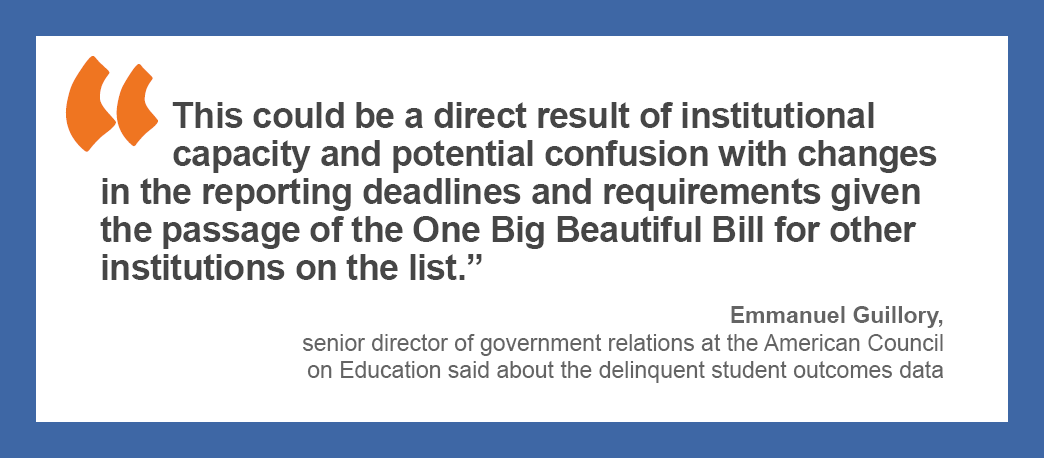
More than 1,900—or roughly 42 percent—of all colleges eligible for federal aid have yet to fully submit required student outcomes data, according to a recent announcement from the Education Department.
A deeper Inside Higher Ed analysis of the announcement and its attached database showed that of the 1,900 colleges, nearly 30 percent hadn’t submitted or underreported all of the seven required data files. I broke down the data in my story this week, which includes several interactive graphics and a searchable table.
The necessary files include information about whether a college’s programs meet licensure requirements, the total cost of attendance and the total debt students bear when they exit a program. The three years’ worth of data was due by or before Oct. 1, 2025.
The department requires the data to measure how students fare after they graduate and whether taxpayer dollars receive return on investment. But Ellen Keast, a department spokesperson, said the lack of submissions will not prevent the Trump administration from executing its new college-accountability earnings test—the first results should be published in 2027.
Still, the lack of compliance is a problem. Several sources told me that it’s in colleges’ best interest to get their data in by the final deadline—Jan. 15, 2027. If they don’t, ED officials warned it “may raise concerns about an institution’s administrative capability to continue participating in the [federal student aid] programs.”