Hello! I’m your host, Jessica Blake, Inside Higher Ed’s federal policy reporter, and this is The Markup, IHE’s weekly roundup of all things higher ed policy.
This week, the Senate finally started to move on appropriations, introducing the final set of budget bills for fiscal year 2027. But, the proposed legislation caused some concern among higher ed research advocates.
The government is currently operating under a Continuing Resolution to fund fiscal year 2027. When it expires on Dec. 11 so does the provision preventing Trump’s political appointees from canceling grants when they see fit. So far, none of the Senate’s new bills extend that block.
A spokesperson for Rep. Susan Collins of Maine, the outgoing appropriations committee chair, assured research advocates that the Senator still supports halting Trump’s controversial proposal. And a Democratic Senate aide confirmed that the party’s goal is also to continue the blockage.
Still, Russ Paulsen, president of the advocacy group Research!America, says the absence of protective language in the new bills is “deeply troubling.”
“Americans don’t want medical progress to be a political football,” Paulsen said. “OMB’s proposed rule would create a system too treacherous and punitive for discovery and innovation.”
Here are three key takeaways from other policy news this week:
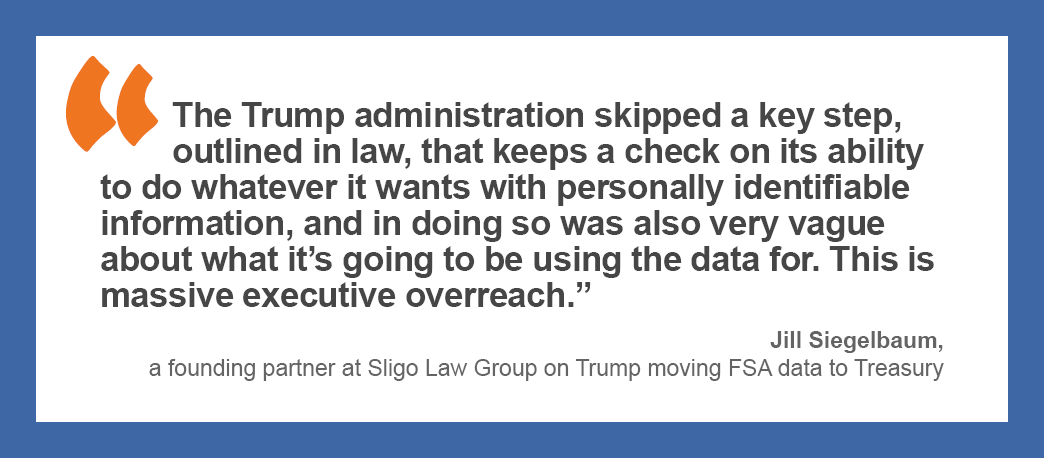
1. Trump Still Wants to Close the Education Department. The Department of Treasury announced a new plan to consolidate and take ownership of several student loan databases earlier this fall—the latest step to shift Federal Student Aid responsibilities away from the Education Department and effectively dismantle the agency without Congressional approval.
But here’s the catch: Few higher education groups knew about Treasury’s new database. Only one, Student Defense, submitted a comment on the proposal before the Nov. 6 deadline.
Student Defense argued that Trump’s plans are not only executive overreach but also violate data privacy law. And while Trump officials deny those arguments, other higher ed policy groups, now aware of the proposal, share Student Defense’s concerns.
“I have a lot of questions about how we reconcile how little we know about … the depth of data that Treasury is looking for in this notice,” one expert said.