As more institutions look to grow their online programs, many are wrestling with a fundamental question: Should they build the capabilities in house or partner with an external provider? It’s a decision that touches everything from budget and staffing to long-term strategy and institutional identity.
I was curious how Wake Forest University’s School of Law approached that question as it expanded its online offerings, particularly its master of legal studies program. Adam Landreth, assistant dean for online programs, has been closely involved in that evolution, including the decision to bring in AllCampus as a strategic partner for student recruitment. I wanted to understand how that decision came together, what the transition looked like in practice and what he’s learned along the way.
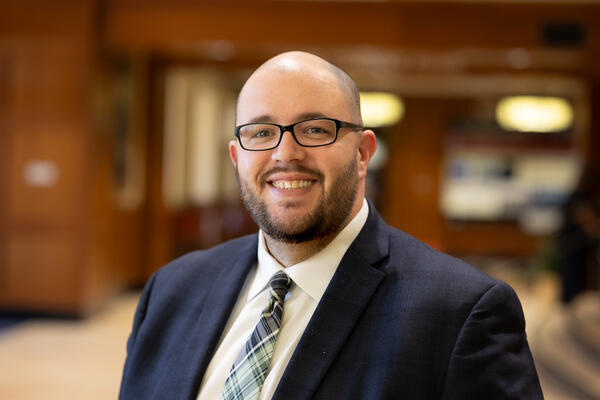
Q: Across higher education, there’s an ongoing debate about whether institutions should build internal capabilities or rely on external partners to support online enrollment growth. How did you think through that decision, and what ultimately led you to bring in an outside partner in AllCampus to support with student recruitment?
A: We had a few considerations that led us to the conclusion that an OPM would be a good option for us. We were dedicating a lot of resources to marketing vendors, but there wasn’t the same level of skin in the game as with a revenue-share model. We were paying six figures regardless of how many students were matriculating, which is very different in an OPM relationship, and so working with a vendor who had a vested interest was attractive to us.
From the beginning, we knew that it was out of our budget to build the internal expertise and capabilities needed for a school of our size. We knew it made sense to access this through a partner. Once we made the decision to seek an OPM, we launched a full-scale RFP.
We are a small team with limited resources, limited expertise and limited time. A vendor like AllCampus has the resources to prioritize our programs and attend to them with care and detail.
Q: How did you approach the transition from an in-house recruitment model (supported by a traditional digital agency) to working with a full-service external strategic partner, and what were the biggest surprises—either positive or challenging—along the way?
A: We were dedicated to jumping in with both feet. Because we’re a small team, a private institution and have a narrow offering of programs, we had the ability to be quite agile and move quickly. This was my biggest takeaway: Be assertive when needed, but also be adaptable and open-minded about how your models or methods might need to change for the benefit of the program and its students.
We set aggressive timelines for the RFP because we knew we wanted to launch the partnership quickly and not miss an admissions cycle due to a lengthy onboarding and launch process. It was important to us that this program, though we were working with a partner, still reflected the Wake Forest Law brand and culture. The onboarding and launch process went leaps and bounds better than we initially expected. A significant amount of time and resources on both sides went into building the scaffolding for a successful launch and funnel, from marketing assets to tech integrations and more.
Q: Based on your experience, what advice would you offer to other institutions wrestling with the “build vs. partner” question as they look to grow their online programs in both the number of offerings and total enrollment?
A: My advice is to be realistic about your capabilities. If you’ve not grown the way you wanted for some time, you’re not magically going to start now.
You can’t know what you don’t know—that’s especially true in marketing. Building a campaign and funnel that truly performs from top to bottom requires a wide range of specialized expertise. It’s rare for any single organization, let alone a university, to have the scale and resources to house all of those capabilities in a way that’s both effective and efficient.
We recognized early that trying to do everything internally would require a significant financial investment, with no guarantee of matching the depth of expertise a dedicated partner could provide. Rather than further stretching already thin resources, it made more sense to collaborate with a partner equipped to bring those capabilities together seamlessly and drive stronger results.
One natural misconception and concern is losing control of your identity or diluting your brand. In our experience, the opposite has been true. Our brand and programs are represented exactly as we intend, with consistency and integrity, while the partnership has significantly expanded our reach. We’re connecting with more people than ever before without compromising who we are.

