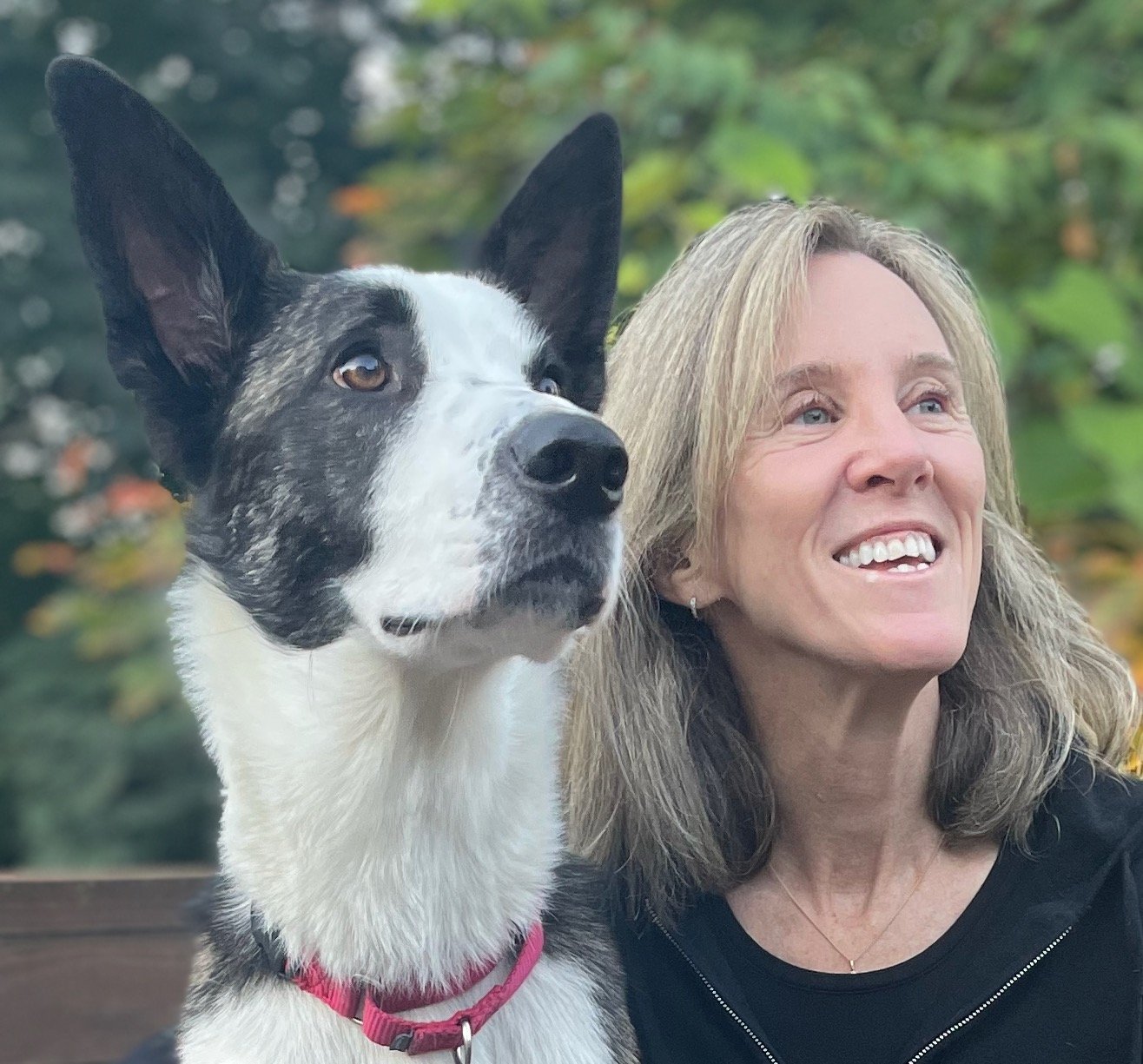
Alena Selezneva
For years, I was The Man—or more accurately, The “No” Man. My jobs could have been seen by many as that of a gatekeeper, evidenced by a steady stream of issued rejections. In the first part of my career, as an acquisitions editor of scholarly books, I said no to the vast majority of projects that came across my desk. Later, working in a highly selective university’s admissions office, I dashed the dreams of thousands of hopeful teens (and disappointed/enraged their ambitious, helicoptering parents).
In those jobs, people treated me like a person with power, returned my calls quickly and occasionally offered bribes treats. Wearing my name tag at conferences made me feel actually kind of attractive. At least until I took it off.
But here’s the thing: I never saw myself as a gatekeeper, and certainly not as someone with power. I didn’t sit in my office rubbing my hands together and snickering, “Oh goodie! Time to go on a rejection spree.” In fact, saying no was the least fun part of the job, even when a rejection was easy (“sorry, at Oxford University Press we don’t publish self-help books on how to become a roving canine astrologer”).
The truth is, I got into those jobs because of who I am: a fan. An enthusiast. An embarrassingly uncool kid who just wants to be around people she admires. My role wasn’t to reject; it was to find the project or application I could get excited about and say yes to.
Years after I left publishing, I am still in touch not only with the authors I published, but with some whose manuscripts I rejected, some who had only served as peer reviewers for me and some whose projects were the ones that got away. It’s always gratifying to see how people’s careers have twisted and turned—or proceeded exactly along a predictably impressive line.
What’s even better, as everyone who teaches knows, is seeing evidence that the potential shown by teens gets realized later in all kinds of wonderful and usually unexpected ways. Recently, I was skimming The New York Times, and, sure enough, there was Faran Krentcil, whose application I read more than 25 years ago, now making her mark in ways that felt both surprising and inevitable.
Admissions offices are filled with people who are true believers and fall in love with “their” applicants. You must say no to the vast majority—literally, thousands—but it’s the yeses that are fun.
And editorial departments are stacked with fans who—rather than talk about themselves—always want to know what you’re working on. The editors I know are among the most intellectually generous and helpful people I’ve ever encountered. And if a project isn’t right for their list, they will often offer advice on whose it might be a better fit for.
When you are in the position of the supplicant, it’s hard to see these roles as anything other than power posts. I get that. Believe me, I can flip right back to that middle school what if he doesn’t like me feeling when I’m waiting to receive a decision about a submission. Even after receiving a contract, if I don’t hear back quickly enough from an editor, I move right along to Oh crap! They just figured out they made a mistake. Which is reminiscent of how I felt when I was admitted to college.
That personal, human-scale gatekeeping feels to me now like something from a long time ago in a galaxy far, far away for most of us.
Sure, at the tippy top of the pyramid, admissions offices are still flush with too many applications, while most of the other nearly 4,000 institutions of higher ed are scrambling to find student butts to fill their seats and offering deep discounts from ridiculously inflated tuition numbers. But at this point, I don’t know how much of the sorting is being done by Elon Musk’s NPC or bots.
Academic publishing is still clogged with more manuscripts than there are book buyers. Because, while most colleges are talking about teaching students career readiness, faculty are still rewarded for doing work so narrowly focused it could fit on the head of a pin (and be read by no one). Perhaps it’s time to rethink how we reward those at institutions whose primary purpose is teaching, not scholarship. I still have a little guilt from my time as an editor; I published monographs whose main purpose was to get folks tenure. It took a lot of resources (and dead trees) to get those books into the world. Libraries had long since stopped buying, and even authors’ mothers didn’t read them.
It’s not even clear, at this point, who is writing the scholarly manuscripts authors submit or the personal essays from college applicants, much less the rejection or acceptance letters. Years ago, Cyndi Lauper belted out that money changes everything. That’s still true, but even more, generative AI has altered the whole freaking world.
All this makes me glad to be in the place where I’ve landed. For the last two decades, my job was no longer to say yes to an application or a manuscript. The students who arrive in my classroom—a professor at a regional comprehensive university—are predominantly first-gen college with lives unlike those who apply to fancy-pants schools. Now my role is to try to find the genuine spark that will survive the machine, to remind them that their contributions must come from who they are—their unique minds, their weird passions, their quirky takes—that can’t be created by an algorithm.
As a professional writer, I’ve been excited by playing with my little bot friends and want to show creative writing students how they can use AI to help them get where they want to go instead of fearing the tech will supplant who they are. Because the reality is, to thrive in this new world order, they must learn these tools. That artificial toothpaste is out of the tube; the challenge is to use it wisely.
Old gatekeepers like me, for all our flaws, were at least human. The new ones aren’t. But in my classroom, surrounded by students who make sacrifices to be here, I am glad to have given up that position of (seeming) power and just lean into my personality as a fan, an enthusiast, helping them open a new door to learn how to best express themselves and keep our democracy alive.