
Inside Higher Ed Home
  • Search
  • Institutional Access

    Your institution provides full access to Inside Higher Ed content.

  • Subscribe
Menu
  • Search
  • Subscribe
  • Insider Dashboard
  • My Account
  • Institutional Access

    Your institution provides full access to Inside Higher Ed content.

    • Menu
    • Subscribe
    • Find a Job
    • News
    • Faculty
      • Contingent Faculty
      • Curriculum
      • Teaching
      • Learning & Assessment
      • Diversity & Equity
      • Career Development
      • Tenure
      • Retirement
      • Labor & Unionization
      • Shared Governance
      • Academic Freedom
      • Research
      • Books & Publishing
    • Students
      • Academics
      • Graduate students and Postdocs
      • Retention
      • Financial Aid
      • Careers
      • Residential Life
      • Athletics
      • Free Speech
      • Physical & Mental Health
      • Safety
    • Diversity
      • Race & Ethnicity
      • Sex & Gender
      • Socioeconomics
      • Religion
      • Disability
      • Age
    • Admissions
      • Traditional-Age
      • Adult & Post-Traditional
      • Transfer
      • Graduate
    • Tech & Innovation
      • Teaching & Learning
      • Artificial Intelligence
      • Digital Publishing
      • Data Analytics
      • Libraries
      • Administrative Tech
      • Alternative Credentials
    • Business
      • Financial Health
      • Cost-Cutting
      • Revenue Strategies
      • Academic Programs
      • Physical Campuses
      • Mergers & Collaboration
      • Fundraising
    • Institutions
      • Research Universities
      • Regional Public Universities
      • Community Colleges
      • Private Nonprofit Colleges
      • Minority-Serving Institutions
      • Religious Colleges
      • Women's Colleges
      • Specialized Colleges
      • For-Profit Colleges
    • Governance
      • Executive Leadership
      • Trustees & Regents
      • State Oversight
      • Accreditation
    • Government
      • Politics & Elections
      • Courts
      • Student Aid Policy
      • Science & Research Policy
      • State Policy
      • Colleges & Localities
    • Workplace
      • Employee Satisfaction
      • Remote & Flexible Work
      • Staff Issues
    • Global
      • Study Abroad
      • International Students in U.S.
      • U.S. Colleges in the World
    • Opinion
    • Views
      • Intellectual Affairs
    • Career Advice
      • Seeking a Faculty Job
      • Advancing in the Faculty
      • Teaching
      • Seeking an Administrative Job
      • Advancing as an Administrator
      • Diversity
    • Columns
      • The Academic Worker
      • Beyond Transfer
      • Call to Action
      • Confessions of a Community College Dean
      • Debatable Ideas
      • Echoes in the Quad
      • Editor’s Note
      • Everything Is Fine
      • Just Visiting
      • Leadership in Higher Education
      • Learning Innovation
      • Online: Trending Now
      • The Public Scholar
      • Resident Scholar
      • Small World
      • Tough Love
    • Letters
    • Hubs
    • Student Success
      • Student Voice
      • Academic Life
      • Health & Wellness
      • The College Experience
      • Life After College
    • Special
    • Podcasts
      • The Key
      • Academic Minute
      • Campus
      • The Pulse
      • Weekly Wisdom
    • Reports & Data
    • Events
    • Quick Takes
    • Solutions
    • Institutional Subscriptions
    • Advertising & Marketing
    • Consulting Services
    • Data & Insights
    • Hiring & Jobs
    • Event Partnerships
    • Campus+
    • More
    • Post a Job
    • Campus
    • About
    • Contact Us
Insider Dashboard
  • About Insider
  • The Sandbox
  • Webcasts
  • Reports
  • About Insider
  • The Sandbox
  • Webcasts
  • Reports
February 07, 2026

No Confidence? No Biggie

"Emotional and political energy that results in wasted effort and psychic harm for both the president and the institution.”

By  Rachel Toor

The Sandbox

Inside Higher Ed Insider
Image of matchbox

From Rachel Toor

I’m just gonna admit it. I sat in faculty senate and raised my hand to vote no confidence in a president.

Someone came into our university with a previous no-confidence vote at another institution. Nearly the entire faculty had favored the interim person, a beloved internal candidate. Reports of screaming from the closed board meeting were widely circulated.

So the president came in with stacked odds. But then did some really good things. And then did some not so good things. And then made the wrong move: got defensive. Early on, in senate, I argued not to be rash and to allow some more time. But time passed and eventually we voted nearly unanimously “no confidence.”

After a public (Zoom) meeting where faculty, staff, graduate students and even faculty spouses let the board have it in ways that to this day I find horrifying, the president was no longer president.

Possibly there was no way to repair the vexed relationship as both sides dug in and carried on with resentment and bitterness. But we all should have tried harder for the sake of the institution. The years that followed included the ugliest, most uncivil meetings I’ve ever attended. Now, we are—like everyone—in a position where we must make big changes, and I’m not sure we’ll be able to work together to get there.

As a regular faculty member, I didn’t know much about the situation beyond our campus, and because, like many of my colleagues, I’ve only ever been full-time tenured faculty at one place, I voted for what I thought was right at the time.

Now I think I was wrong. I think we were wrong.

Here’s what I learned too late: There’s a difference between a president doing hinky things and a president making hard decisions. If someone is corrupt, they should be removed. If they’re making hard decisions I don’t agree with but for reasons that have an institution’s best interests in mind, well, that’s why they have their job and I’m lucky to have mine. We have to believe we’re playing on the same team, and also recognize that there’s a captain. Shared governance notwithstanding, I am still an employee.

Some presidents now are saying they’re wearing their no-confidence vote as a badge of honor. They may say that publicly, but I suspect (many, though not all) privately suffer needless pain while trying to do their best. If we keep running out the good people, we’re going to be in even deeper doo-doo. Friendly fire is the last thing we all need when there’s plenty coming from the enemy.

If you need a break, I just devoured Julia May Jonas’s 2022 novel, Vladimir (recommended by a president friend). If you liked Stoner, this is a way spicier update of the campus novel. Read it before the Netflix series comes out in March. Hey! Should we have a Sandbox book group?

The writer is a former president.

In the high-stakes world of academic governance, the “vote of no confidence” is often treated as the nuclear option. The dramatic nature of such a vote suggests a turning point, a moment of institutional reckoning. But the historical reality is far more stagnant. In most cases, a faculty vote of no confidence is an immense expenditure of emotional and political energy that results in wasted effort and psychic harm for both the president and the institution.

The primary reason these votes fail to produce results is that boards often view themselves as protectors of the president they hired. A no-confidence vote triggers a circle-the-wagons mentality. Instead of prompting a resignation, the vote forces the board to publicly double down on their support to avoid appearing weak or reactionary. The result is stalemate: The faculty has deployed its biggest weapon, yet the president remains in office, often with a renewed mandate from the board.

And then what? When a president knows the faculty has formally rejected their leadership, the incentive for genuine collaboration vanishes. Governance becomes a series of defensive maneuvers rather than a pursuit of academic excellence. The vote generates negative headlines, hurting donor relations and discouraging prospective students and employees. It’s a bad look for everyone. Instead of focusing on faculty excellence, curriculum development or student retention, the administration spends its time on reputation management and defensive positioning.

For faculty, the effort is often a recipe for burnout and deeper disillusionment. The assumption is often that a vote alone will transform everything: Budgets will overflow with funds, stakeholders will ride in to save the day and the institution will return to some idealized state. In reality, organizing a vote requires enormous time and effort. When that effort produces no tangible change in leadership, the frustration intensifies and the fatigue sets in.

These days, votes of no confidence are not a career killer. They may inspire a leader to leave sooner than they otherwise would. They may cause a leader to be less productive while remaining in position as they seek their next opportunity. Many presidents who have received votes of no confidence in one appointment have moved on to second presidencies. Those hiring them often examine the context and events leading up to the vote as evidence of courageous leadership in difficult circumstances.

In the last couple of years, these votes have become so common in higher education that some presidents view them as a badge of courage rather than a scarlet letter.

The only time I’ve seen votes of no confidence actually push out a president is when other factors were already in play—factors that allowed a board to use the vote as convenient public messaging. If a president was already on their way out, the faculty’s vote provided an easy way to frame the story.

As I look back on my own leadership career in higher education, I’m surprised I was never subjected to an actual vote of no confidence. I led universities on the forefront of serious fiscal challenge, and the actions I took to align expenses with revenue engendered understandable faculty anger. These efforts took the form of significant academic program realignment, reductions of faculty, and often a complete shift in how the academic enterprise related to itself and to external stakeholders.

While these decisions made business sense, they’re exactly the kind that prompt faculty to scream “no confidence.” In my work now coaching presidents, I rarely find leaders subjected to these votes to be inept. Most often, they are competent leaders making tough decisions. The faculty are understandably angry and frustrated, but they don’t know what else to do. I’d love it if we could at least change the label to be more accurate and call it a “vote of dissatisfaction.” At least that would be honest.

There was a moment where I thought I might face such a vote. We were at a difficult point of repositioning the institution, and during a tense faculty governance meeting, I told the group something direct: While they might be frustrated with me and question our approach, the essential threats to the institution would remain the same no matter who was president.

The room went silent.

I continued: They could work to remove me from my position, and in the end all they would get was a taller, thinner, younger version of me. The problems wouldn’t change, and our already limited solutions would become even more limited. I invited them to continue working with me to find a set of least-bad solutions to deal with the greatest threats facing our university.

We got through that moment. There was never a vote.

https://ad.doubleclick.net/ddm/trackclk/N830975.128157INSIDEHIGHEREDUCAT/B34830987.442900836;dc_trk_aid=647749747;dc_trk_cid=261346642;dc_lat=;dc_rdid=;tag_for_child_directed_treatment=;tfua=;ltd=;dc_tdv=1

Want to advertise here?

If you want to get this email, please become a member and support IHE’s journalism. Democracy (and higher education) dies in darkness. And so, apparently, does The Washington Post.

All previous issues of The Sandbox are available here. 

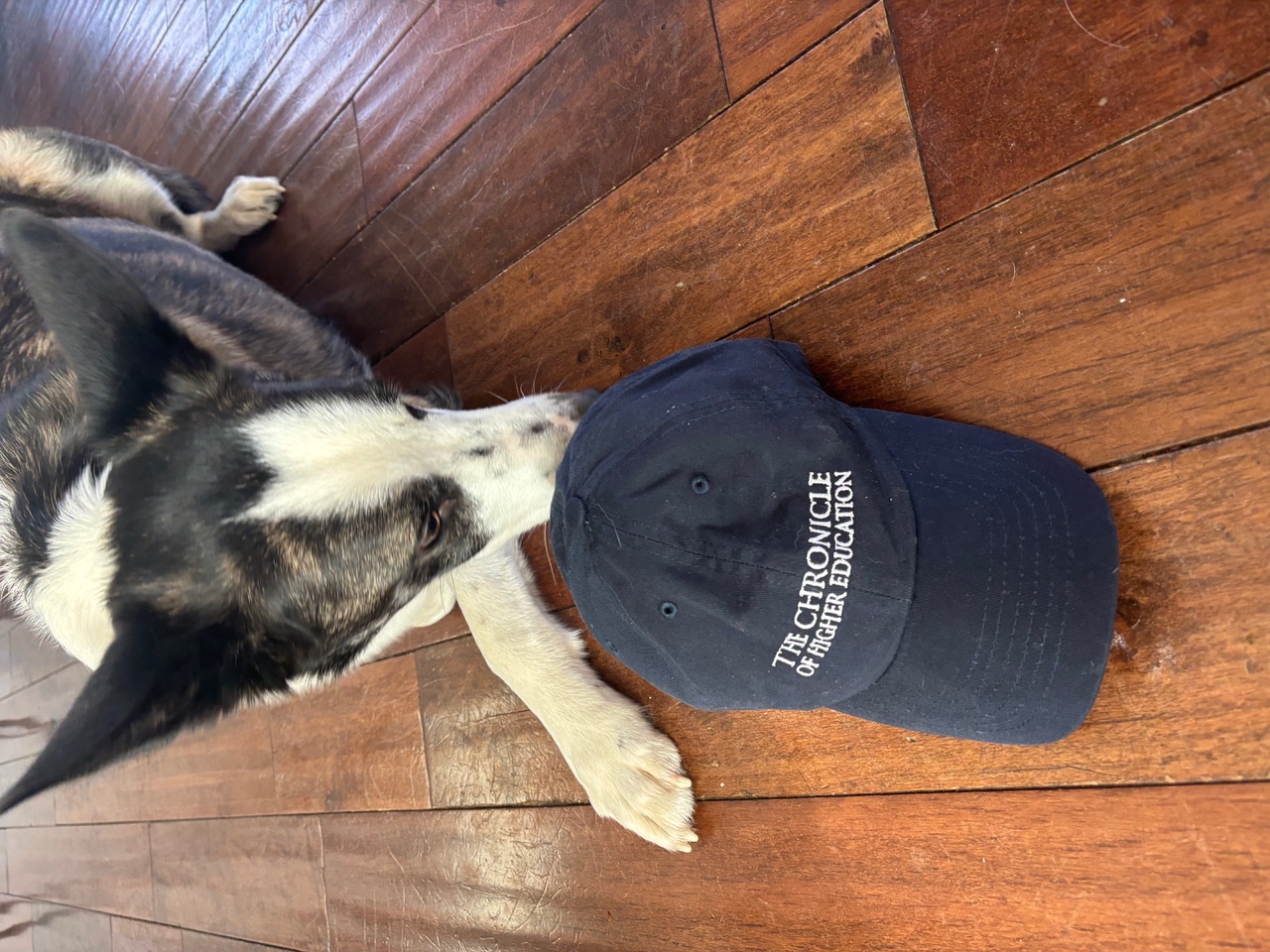
Harry the dog with cap from The Chronicle of Higher Education

While trick or treating at the vendor tables, I chatted with folks from a publication I was proud to have written for (for more than two decades) and which I still read daily. They were nice enough to give me a hat.

JOIN TODAY


The Sandbox

Not your typical weekly newsletter. This is a space where presidents and chancellors can say what they really think without fear. Everyone is welcome to read, but only those who have been in the top job can submit to us. The Sandbox, by Rachel Toor, is an exclusive benefit of our paid Insider membership program.


The Sandbox Archive

The Real Text Messages of Lady Presidents

September 19, 2026

Retreat Rights

September 12, 2026

What Does a College Student Look Like?

August 29, 2026

Wackadoodle Newsletter Turns 3

August 22, 2026

Presidents: Quit Yer Whining

August 15, 2026
View All
Advertisement

Company

  • Contact Us
  • About Us
  • Work with Us
  • History
  • Meet the Team
  • Advertise
  • Subscriptions
  • Find a Job
  • Post a Job

Legal

  • Rights & Permissions
  • Privacy
  • Terms of Service
  • Do Not Sell or Share My Personal Information

Newsletter

Create a free account and get higher ed's most essential news, analysis, and career advice delivered to your inbox.

Copyright © 2026 Inside Higher Ed All rights reserved.

  • Menu
  • Insider Dashboard
  • My Account
  • Subscribe
  • Find a Job
  • News
  • Faculty
    • Contingent Faculty
    • Curriculum
    • Teaching
    • Learning & Assessment
    • Diversity & Equity
    • Career Development
    • Tenure
    • Retirement
    • Labor & Unionization
    • Shared Governance
    • Academic Freedom
    • Research
    • Books & Publishing
  • Students
    • Academics
    • Graduate students and Postdocs
    • Retention
    • Financial Aid
    • Careers
    • Residential Life
    • Athletics
    • Free Speech
    • Physical & Mental Health
    • Safety
  • Diversity
    • Race & Ethnicity
    • Sex & Gender
    • Socioeconomics
    • Religion
    • Disability
    • Age
  • Admissions
    • Traditional-Age
    • Adult & Post-Traditional
    • Transfer
    • Graduate
  • Tech & Innovation
    • Teaching & Learning
    • Artificial Intelligence
    • Digital Publishing
    • Data Analytics
    • Libraries
    • Administrative Tech
    • Alternative Credentials
  • Business
    • Financial Health
    • Cost-Cutting
    • Revenue Strategies
    • Academic Programs
    • Physical Campuses
    • Mergers & Collaboration
    • Fundraising
  • Institutions
    • Research Universities
    • Regional Public Universities
    • Community Colleges
    • Private Nonprofit Colleges
    • Minority-Serving Institutions
    • Religious Colleges
    • Women's Colleges
    • Specialized Colleges
    • For-Profit Colleges
  • Governance
    • Executive Leadership
    • Trustees & Regents
    • State Oversight
    • Accreditation
  • Government
    • Politics & Elections
    • Courts
    • Student Aid Policy
    • Science & Research Policy
    • State Policy
    • Colleges & Localities
  • Workplace
    • Employee Satisfaction
    • Remote & Flexible Work
    • Staff Issues
  • Global
    • Study Abroad
    • International Students in U.S.
    • U.S. Colleges in the World
  • Opinion
    • Opinion
  • Views
    • Intellectual Affairs
  • Career Advice
    • Seeking a Faculty Job
    • Advancing in the Faculty
    • Teaching
    • Seeking an Administrative Job
    • Advancing as an Administrator
    • Diversity
  • Columns
    • The Academic Worker
    • Beyond Transfer
    • Call to Action
    • Confessions of a Community College Dean
    • Debatable Ideas
    • Echoes in the Quad
    • Editor’s Note
    • Everything Is Fine
    • Just Visiting
    • Leadership in Higher Education
    • Learning Innovation
    • Online: Trending Now
    • The Public Scholar
    • Resident Scholar
    • Small World
    • Tough Love
  • Letters
  • Hubs
  • Student Success
    • Student Voice
    • Academic Life
    • Health & Wellness
    • The College Experience
    • Life After College
  • Special
  • Podcasts
    • The Key
    • Academic Minute
    • Campus
    • The Pulse
    • Weekly Wisdom
  • Reports & Data
  • Events
  • Quick Takes
  • Solutions
  • Institutional Subscriptions
  • Advertising & Marketing
  • Consulting Services
  • Data & Insights
  • Hiring & Jobs
  • Event Partnerships
  • Campus+
  • More
  • Post a Job
  • Campus
  • About
  • Contact Us