Inside Higher Ed Home
  • Search
  • Institutional Access

    Your institution provides full access to Inside Higher Ed content.

  • Subscribe
Menu
  • Search
  • Subscribe
  • Insider Dashboard
  • My Account
  • Institutional Access

    Your institution provides full access to Inside Higher Ed content.

    • Menu
    • Subscribe
    • Find a Job
    • News
    • Faculty
      • Contingent Faculty
      • Curriculum
      • Teaching
      • Learning & Assessment
      • Diversity & Equity
      • Career Development
      • Tenure
      • Retirement
      • Labor & Unionization
      • Shared Governance
      • Academic Freedom
      • Research
      • Books & Publishing
    • Students
      • Academics
      • Graduate students and Postdocs
      • Retention
      • Financial Aid
      • Careers
      • Residential Life
      • Athletics
      • Free Speech
      • Physical & Mental Health
      • Safety
    • Diversity
      • Race & Ethnicity
      • Sex & Gender
      • Socioeconomics
      • Religion
      • Disability
      • Age
    • Admissions
      • Traditional-Age
      • Adult & Post-Traditional
      • Transfer
      • Graduate
    • Tech & Innovation
      • Teaching & Learning
      • Artificial Intelligence
      • Digital Publishing
      • Data Analytics
      • Libraries
      • Administrative Tech
      • Alternative Credentials
    • Business
      • Financial Health
      • Cost-Cutting
      • Revenue Strategies
      • Academic Programs
      • Physical Campuses
      • Mergers & Collaboration
      • Fundraising
    • Institutions
      • Research Universities
      • Regional Public Universities
      • Community Colleges
      • Private Nonprofit Colleges
      • Minority-Serving Institutions
      • Religious Colleges
      • Women's Colleges
      • Specialized Colleges
      • For-Profit Colleges
    • Governance
      • Executive Leadership
      • Trustees & Regents
      • State Oversight
      • Accreditation
    • Government
      • Politics & Elections
      • Courts
      • Student Aid Policy
      • Science & Research Policy
      • State Policy
      • Colleges & Localities
    • Workplace
      • Employee Satisfaction
      • Remote & Flexible Work
      • Staff Issues
    • Global
      • Study Abroad
      • International Students in U.S.
      • U.S. Colleges in the World
    • Opinion
    • Views
      • Intellectual Affairs
    • Career Advice
      • Seeking a Faculty Job
      • Advancing in the Faculty
      • Teaching
      • Seeking an Administrative Job
      • Advancing as an Administrator
      • Diversity
    • Columns
      • The Academic Worker
      • Beyond Transfer
      • Call to Action
      • Confessions of a Community College Dean
      • Debatable Ideas
      • Echoes in the Quad
      • Editor’s Note
      • Everything Is Fine
      • Just Visiting
      • Leadership in Higher Education
      • Learning Innovation
      • Online: Trending Now
      • The Public Scholar
      • Resident Scholar
      • Small World
      • Tough Love
    • Letters
    • Hubs
    • Student Success
      • Student Voice
      • Academic Life
      • Health & Wellness
      • The College Experience
      • Life After College
    • Special
    • Podcasts
      • The Key
      • Academic Minute
      • Campus
      • The Pulse
      • Weekly Wisdom
    • Reports & Data
    • Events
    • Quick Takes
    • Solutions
    • Institutional Subscriptions
    • Advertising & Marketing
    • Consulting Services
    • Data & Insights
    • Hiring & Jobs
    • Event Partnerships
    • Campus+
    • More
    • Post a Job
    • Campus
    • About
    • Contact Us
Insider Dashboard
  • About Insider
  • The Sandbox
  • Webcasts
  • Reports
  • About Insider
  • The Sandbox
  • Webcasts
  • Reports
June 20, 2026

The President as Pain Sponge

The president’s job is increasingly “about becoming the one person on campus at whom everyone feels free to aim their anger.”

By  Rachel Toor

The Sandbox

Inside Higher Ed Insider
image of a person with waves coming out of their head

From Rachel Toor

Readers of The Sandbox are aware of the challenges of the presidency. But it never hurts to be reminded, if only so you know you’re not alone. Multiple constituencies are quick to point out that you took on these jobs and you can’t complain because, well, you know why. Hence, this space.

Successful leaders seem mostly able to keep in mind which side of the comma people are attacking. To use a random example, if “Gordon Gee, President” is speaking, he knows the vitriol is being directed to the right side of the comma (until, say, he retires and gets back his First Amendment rights). Increasingly, though, attacks on leaders focus on the left side of that comma.

Doug Lederman, co-founder of Inside Higher Ed, was careful to keep his writing on the right side of the comma. As a good journalist, he opined sparingly. Now that the only title after his name is “columnist” (and sometimes “consultant” and always “Rachel’s former work wife”), he is sharing his opinions freely and, you know, trying to get stuff done.

Professors tend to work from the left side. We represent only ourselves when we’re not in the classroom. In our scholarly work, when writing for mainstream media, and posting idiotic things on social media, we’re people, not mouthpieces. Because: the First Amendment.

We’re fortunate. As today’s president reminds us, things have gotten icky, and the comma is being deleted for many leaders.
The writer is a current president.

There’s a quiet truth most college presidents learn the hard way: The job is no longer just about budgets and mission. It’s about becoming the one person on campus at whom everyone feels free to aim their anger. These days, almost anyone with a stake in the institution seems to feel licensed to say anything to a president, in any tone, at any hour, with no guardrails.

The criticisms aren’t just sharp; they’re personal. And that’s new.

We’ve always had disagreements in higher education. That’s the point of the enterprise: debate, test ideas, refine them. But the climate around the presidency has shifted from principled disagreement to something that looks and feels like bullying. Trustees, faculty and staff, students, alumni, legislators, and online commentators often treat a president not as a person exercising judgment but as an all-purpose receptacle for grievance. The result is a role that becomes less sustainable by the day.

One of the most striking changes is the sense of permission people feel to cross personal boundaries. Presidents now routinely receive messages they wouldn’t wish on anyone else in their community—language they would never allow in a classroom or a staff meeting. It’s not “I disagree with this decision because…” It’s “You are a fraud,” “You lack character,” “You should be ashamed,” and far worse. Identity becomes fair game. Family isn’t always off-limits. Rumor and innuendo get laundered as “accountability.”

The medium amplifies it. A late-night email dashed off in frustration, a viral thread that abstracts a leader into a caricature, a public comment period that becomes a performance rather than a conversation—these can all land like a punch. People who would never berate a colleague face-to-face seem to feel free to unload on a president. The title, paradoxically, removes basic courtesy.

Boards are meant to be a president’s strategic ballast. Too often now, they function as another front of pressure—sometimes internalizing the cultural storm rather than steadying the ship. Presidents get mixed signals: “Don’t speak publicly” and “Why aren’t you leading?” “Move fast” and “Don’t make waves.” When the winds shift, the president becomes the easiest person to blame—because the president is the most visible person in the room. Accountability is necessary; scapegoating is corrosive. There’s a difference.

The healthiest boards I’ve seen ask hard questions in private and have their president’s back in public. They avoid performative oversight. They set direction, hold to values, and let presidents operate. That model is getting rarer.

Faculty and staff carry their own heavy burdens right now—tight budgets, rising expectations, exhausted colleagues, polarized classrooms. Frustration will surface; it should. But somewhere along the way, the line blurred between critiquing decisions and attacking the person who made them. When “I disagree with this policy” becomes “You’re dishonest, you don’t care about students, you’re unfit,” we lose the possibility of working through the disagreement at all.

Student and alumni voices matter deeply. They also travel faster and land harder than ever before. A single clip can define an entire decision. Nuance doesn’t always survive the algorithm. When the temperature is already high, even good-faith disagreements can calcify into personal condemnation of the president. It’s one thing to hold a leader to account; it’s another to pursue them as a symbol to be toppled.

A president is the steward of the whole, not the spokesperson for any one faction. That means there will be days when the president disappoints everyone, because trade-offs are real and values sometimes collide. It’s fair to be angry about an outcome. It’s not fair to deny another human being basic dignity.

Presidents learn to absorb a lot. What people don’t see is the human cost of being the institution’s shock absorber. It’s the steady erosion that comes from daily incivility: the midnight emails that land like a rock in the gut, the meeting where a line gets crossed and everyone looks down, the moment you realize your children’s names were mentioned in a thread. It’s the loneliness of holding confidences you can’t break, not being able to overcome problems you didn’t create and can’t control, and being bound by constraints you can’t explain, while people assume your silence means you don’t care.

Most presidents I know are not brittle or thin-skinned. They chose this work because they believe in the good that higher education can do. But no one can flourish in a role where personal attack and scapegoating is normalized, where boundaries are optional, and where the president is expected to be endlessly available as the target of everybody’s blame and pain.

A message from Sara Custer, editor in chief

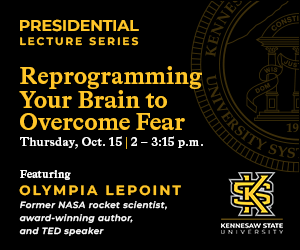
As a Premium Insider, you get free access to subscriber-only events like our webcasts on higher education leadership and strategy. The last in our three-part series is Wednesday, June 24, at 2 p.m. Eastern. We’ll hear from presidents and board chairs at private and public institutions about how they navigated turbulent times together. Find out more and register here.

https://www.eventcreate.com/e/presidentiallectureseries

Want to advertise here?

If you want to get this email, please become a member and support IHE’s journalism. Democracy (and higher education) die in darkness.

All previous issues of The Sandbox are available here. 

Dog Harry amid wildflowers

Get a dog, get outside, save your sanity. 

JOIN TODAY


The Sandbox

Not your typical weekly newsletter. This is a space where presidents and chancellors can say what they really think without fear. Everyone is welcome to read, but only those who have been in the top job can submit to us. The Sandbox, by Rachel Toor, is an exclusive benefit of our paid Insider membership program.


The Sandbox Archive

The Worst of Times: FY 2025–26

October 3, 2026

Hiring a Leadership Team

September 26, 2026

The Real Text Messages of Lady Presidents

September 19, 2026

Retreat Rights

September 12, 2026

What Does a College Student Look Like?

August 29, 2026
View All
Advertisement

Company

  • Contact Us
  • About Us
  • Work with Us
  • History
  • Meet the Team
  • Advertise
  • Subscriptions
  • Find a Job
  • Post a Job

Legal

  • Rights & Permissions
  • Privacy
  • Terms of Service
  • Do Not Sell or Share My Personal Information

Newsletter

Create a free account and get higher ed's most essential news, analysis, and career advice delivered to your inbox.

Copyright © 2026 Inside Higher Ed All rights reserved.

  • Menu
  • Insider Dashboard
  • My Account
  • Subscribe
  • Find a Job
  • News
  • Faculty
    • Contingent Faculty
    • Curriculum
    • Teaching
    • Learning & Assessment
    • Diversity & Equity
    • Career Development
    • Tenure
    • Retirement
    • Labor & Unionization
    • Shared Governance
    • Academic Freedom
    • Research
    • Books & Publishing
  • Students
    • Academics
    • Graduate students and Postdocs
    • Retention
    • Financial Aid
    • Careers
    • Residential Life
    • Athletics
    • Free Speech
    • Physical & Mental Health
    • Safety
  • Diversity
    • Race & Ethnicity
    • Sex & Gender
    • Socioeconomics
    • Religion
    • Disability
    • Age
  • Admissions
    • Traditional-Age
    • Adult & Post-Traditional
    • Transfer
    • Graduate
  • Tech & Innovation
    • Teaching & Learning
    • Artificial Intelligence
    • Digital Publishing
    • Data Analytics
    • Libraries
    • Administrative Tech
    • Alternative Credentials
  • Business
    • Financial Health
    • Cost-Cutting
    • Revenue Strategies
    • Academic Programs
    • Physical Campuses
    • Mergers & Collaboration
    • Fundraising
  • Institutions
    • Research Universities
    • Regional Public Universities
    • Community Colleges
    • Private Nonprofit Colleges
    • Minority-Serving Institutions
    • Religious Colleges
    • Women's Colleges
    • Specialized Colleges
    • For-Profit Colleges
  • Governance
    • Executive Leadership
    • Trustees & Regents
    • State Oversight
    • Accreditation
  • Government
    • Politics & Elections
    • Courts
    • Student Aid Policy
    • Science & Research Policy
    • State Policy
    • Colleges & Localities
  • Workplace
    • Employee Satisfaction
    • Remote & Flexible Work
    • Staff Issues
  • Global
    • Study Abroad
    • International Students in U.S.
    • U.S. Colleges in the World
  • Opinion
    • Opinion
  • Views
    • Intellectual Affairs
  • Career Advice
    • Seeking a Faculty Job
    • Advancing in the Faculty
    • Teaching
    • Seeking an Administrative Job
    • Advancing as an Administrator
    • Diversity
  • Columns
    • The Academic Worker
    • Beyond Transfer
    • Call to Action
    • Confessions of a Community College Dean
    • Debatable Ideas
    • Echoes in the Quad
    • Editor’s Note
    • Everything Is Fine
    • Just Visiting
    • Leadership in Higher Education
    • Learning Innovation
    • Online: Trending Now
    • The Public Scholar
    • Resident Scholar
    • Small World
    • Tough Love
  • Letters
  • Hubs
  • Student Success
    • Student Voice
    • Academic Life
    • Health & Wellness
    • The College Experience
    • Life After College
  • Special
  • Podcasts
    • The Key
    • Academic Minute
    • Campus
    • The Pulse
    • Weekly Wisdom
  • Reports & Data
  • Events
  • Quick Takes
  • Solutions
  • Institutional Subscriptions
  • Advertising & Marketing
  • Consulting Services
  • Data & Insights
  • Hiring & Jobs
  • Event Partnerships
  • Campus+
  • More
  • Post a Job
  • Campus
  • About
  • Contact Us