
Inside Higher Ed Home
  • Search
  • Institutional Access

    Your institution provides full access to Inside Higher Ed content.

  • Subscribe
Menu
  • Search
  • Subscribe
  • Insider Dashboard
  • My Account
  • Institutional Access

    Your institution provides full access to Inside Higher Ed content.

    • Menu
    • Subscribe
    • Find a Job
    • News
    • Faculty
      • Contingent Faculty
      • Curriculum
      • Teaching
      • Learning & Assessment
      • Diversity & Equity
      • Career Development
      • Tenure
      • Retirement
      • Labor & Unionization
      • Shared Governance
      • Academic Freedom
      • Research
      • Books & Publishing
    • Students
      • Academics
      • Graduate students and Postdocs
      • Retention
      • Financial Aid
      • Careers
      • Residential Life
      • Athletics
      • Free Speech
      • Physical & Mental Health
      • Safety
    • Diversity
      • Race & Ethnicity
      • Sex & Gender
      • Socioeconomics
      • Religion
      • Disability
      • Age
    • Admissions
      • Traditional-Age
      • Adult & Post-Traditional
      • Transfer
      • Graduate
    • Tech & Innovation
      • Teaching & Learning
      • Artificial Intelligence
      • Digital Publishing
      • Data Analytics
      • Libraries
      • Administrative Tech
      • Alternative Credentials
    • Business
      • Financial Health
      • Cost-Cutting
      • Revenue Strategies
      • Academic Programs
      • Physical Campuses
      • Mergers & Collaboration
      • Fundraising
    • Institutions
      • Research Universities
      • Regional Public Universities
      • Community Colleges
      • Private Nonprofit Colleges
      • Minority-Serving Institutions
      • Religious Colleges
      • Women's Colleges
      • Specialized Colleges
      • For-Profit Colleges
    • Governance
      • Executive Leadership
      • Trustees & Regents
      • State Oversight
      • Accreditation
    • Government
      • Politics & Elections
      • Courts
      • Student Aid Policy
      • Science & Research Policy
      • State Policy
      • Colleges & Localities
    • Workplace
      • Employee Satisfaction
      • Remote & Flexible Work
      • Staff Issues
    • Global
      • Study Abroad
      • International Students in U.S.
      • U.S. Colleges in the World
    • Opinion
    • Views
      • Intellectual Affairs
    • Career Advice
      • Seeking a Faculty Job
      • Advancing in the Faculty
      • Teaching
      • Seeking an Administrative Job
      • Advancing as an Administrator
      • Diversity
    • Columns
      • The Academic Worker
      • Beyond Transfer
      • Call to Action
      • Confessions of a Community College Dean
      • Debatable Ideas
      • Echoes in the Quad
      • Editor’s Note
      • Everything Is Fine
      • Just Visiting
      • Leadership in Higher Education
      • Learning Innovation
      • Online: Trending Now
      • The Public Scholar
      • Resident Scholar
      • Small World
      • Tough Love
    • Letters
    • Hubs
    • Student Success
      • Student Voice
      • Academic Life
      • Health & Wellness
      • The College Experience
      • Life After College
    • Special
    • Podcasts
      • The Key
      • Academic Minute
      • Campus
      • The Pulse
      • Weekly Wisdom
    • Reports & Data
    • Events
    • Quick Takes
    • Solutions
    • Institutional Subscriptions
    • Advertising & Marketing
    • Consulting Services
    • Data & Insights
    • Hiring & Jobs
    • Event Partnerships
    • Campus+
    • More
    • Post a Job
    • Campus
    • About
    • Contact Us
Insider Dashboard
  • About Insider
  • The Sandbox
  • Webcasts
  • Reports
  • About Insider
  • The Sandbox
  • Webcasts
  • Reports
September 16, 2023

A Little Gratitude Goes a Long Way

You don't need to say thank you to be a successful leader, but it may not hurt.  

By  Rachel Toor

The Sandbox

Inside Higher Ed Insider
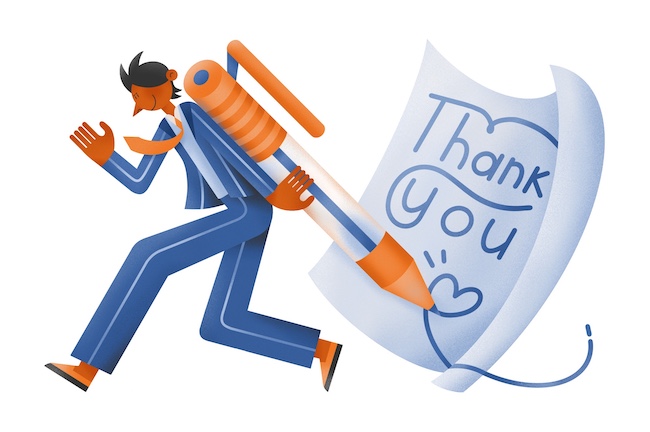
Illustration of a leader writing a "thank you" note.

One year ago, I wrote a piece about wanting to quit academe. By March, in a jocular exchange with Doug Lederman, whom I’ve known since we still “hung up” the phone, I asked if Inside Higher Ed needed someone to make coffee or clean the bathrooms. As it happened, Doug had been looking for a non-journalist to create a something—a newsletter that was not quite a newsletter—for higher ed leaders. 

[If it’s not already clear, I am not a journalist. I may have been the only media person in the world who cheered when Janet Malcolm wrote that incendiary first sentence now a truism taught in J-school.]

For the last six months, I've reached out to people, chatted and Zoomed my head off, and assembled a wonderful kitchen cabinet to figure out what leaders might need, like, and weren’t getting. Former presidents who had time to respond to email and talk for hours tutored me. A number of current presidents and chancellors told me about their struggles. In consultants and executive coaches, I found a gold mine. Search company honchos, comms folks, chiefs of staff all gave me tips and contacts.

To create open dialogue, I ask leaders to trust me with their stories and assure them I will keep confidences. It’s a big ask. A president I’ve known forever said, “I’ll chat with you, but if you burn me, I’ll never talk to you again.” Roger that. 

Mostly what I heard from current leaders was everyone wants to tell me how to do my job. And, until you’ve been in the role, you have no idea what it takes, so please go directly to hell. 

We want to provide a platform for leaders to connect, not a place for finger-pointy venting. Except sometimes. Board members can be stupid-heads and faculty can be ridiculous and donors make wackadoodle requests. Ranting can be useful, especially if it’s funny.

As we wiggle our way into this new format, I want what many of you ask of applicants: please write in a way that allows us to see how you have faced challenges and what you’ve learned from failure. No one likes the narrator who is the hero of their own story.

Those who have read me for the last 25 years in The Chronicle of Higher Education know that I have been waging war against academic prose. In 1993, Patty Limerick diagnosed the problem: professors are the people no one wanted to dance with in high school. Nearly 50 years before that, Orwell showed how bad writing can lead to, well, totalitarianism. 

Many presidents seem to have calcified into their role and find it hard to write and speak authentically (we understand why). Plus, most people suck at writing in the first-person personal. I see published articles and memoirs from presidents that read like typical college admissions essays, some even in the “I am a dynamic figure” genre. 

I hope leaders who want to be candid and vulnerable about the challenges of their jobs—and feel the urge to help prepare the next generation—will reach out to me. I promise to work hard to get this conversation going, keep it vigorous, and make your reading time enlightening and entertaining. Because I want to protect identities, I’ll go one step further than a regular editor and massage your voices so no one can jump out with a “gotcha.” If you mention Doritos, you can be sure I’ll change that to Cheez-Its. 

You may want to forward an issue about dealing with difficult board members to your most difficult board member and chirp, “I’m so fortunate I have you!” (Then encourage them to pony up and join because no one loves a freeloader.) Or perhaps you’ll gift a subscription to an excellent cabinet member who wants to become a president and needs to know what’s in store. Maybe there's a dedicated faculty senate leader who could be groomed to come over to the dark (i.e., administration) side. 

We just added two new Insider reports: Institutional Rightsizing and Diversifying & Generating Revenue. In future issues of The Sandbox, we will be posting executive leadership jobs. 

Oh, and please send us photos of non-human occupants of the president's house. Include their pronouns. I will try not to get their names wrong (sorry Emrys Casey!).  
Regrets, I've Had a Few

There are plenty of things that shock me about what higher ed leaders have to deal with.   

Alumni who feel free to say they don’t like the way the president dresses. Faculty who believe budget problems could be solved by waving a wand and getting rid of D-1 football. Cabinet members who won’t tell the truth to save their boss’s job. Trustees who know jack about universities and weigh in on details with no clue how much they don’t know.  

One small thing surprised me and made me curious. 

It came when I read Leading Colleges and Universities: Lessons from Higher Education Leaders, edited by Stephen Joel Trachtenberg, Gerald B. Kauvar, and E. Gordon Gee.  

The 2018 book (yes, back in the halcyon pre-pandemic days) is a collection of essays by past and current presidents, an A-team roster, who weigh in on various topics: getting started; internal issues; external challenges; and personal difficulties. As with all such books, some chapters are better written and more useful than others, but there’s a lot of wisdom and useful lessons shared in the pages.  

For those who no longer have time to read more than road signs, some tasty morsels for the tl;dr set comes at the end of most chapters. Presidents were asked to answer questions about what they wished they had known and what they might have done differently.

These little sections provide insight into what it’s like to do the job—sometimes generally applicable, sometimes specific to institutions.   

In this newsletter, we will be reissuing (with permission from Johns Hopkins University Press and its fabulous editorial director Greg Britton) many of these useful bits. And I'll also be asking current leaders to answer similar questions.

The small thing that got me wondering?   

How many presidents said what they wished they had done was say “thank you” more.    

If you’re in a relationship, you know how important it is to thank your partner for cleaning the bathroom, walking the dog, or doing the driving on long car trips.

It stinks to be taken for granted and it's hard to blame folks for getting crabby about work that is unnoticed and unappreciated. A little gratitude goes a long way, and “Thanks,” along with “I love you” and “Do you mind if I eat the rest of this?” should never go without saying.  

Most of us learn to bring small courtesies into our personal relationships and it makes things, well, nicer.   

Why, then, wouldn’t leaders do that at work? I doubt anyone needs reminders that all jobs—whether balancing a budget, teaching an intro class, or parallel parking in a crowded city—can be hard and feel thankless.

Faculty are quick to say they feel unappreciated by administrators. Those who don’t complain as much but perhaps work harder with even less praise are staff members.  

A dean once told me that she didn’t comment on the professional achievements of her faculty because if she missed someone, it would come back to bite her. So instead, she complimented people on their shoes. That did not make for a good deanship.  

A former journalist who spent years covering higher education and now works on a campus told me that of the 3,000-4,000 college and university presidents he interviewed over the course of his career, there was exactly one who sent him a hand-written thank you note. 

Why is it that at the end of successful careers leaders look back with regret on not doing something that seems easy? Is it due to the pressures of the job—that in the tyranny of the immediate, there's no time to walk the dog, let alone jot down notes of appreciation? 

We're curious to hear more about regrets, and about successful practices that are often overlooked. 

And, because it should never go without saying, thanks to those of you who have taken on the challenging task of leading colleges and universities and who get more criticism than gratitude for doing that hard work. 

Email us


Book Excerpt

From Leading Colleges and Universities: Lessons from Higher Education Leaders (Johns Hopkins University Press, 2018)

Freeman Hrabowski, former president, University of Maryland, Baltimore County

What I Wish I Had Known When I Started I wish I had known that everything I say is taken very seriously by all those around me. Consequently, I wish I’d known how important it is to be disciplined in thinking carefully before acting, even when simply joking. During my first years as president, I continued to be surprised when I realized people had initiated new projects based on a throw-away line or side comment from me. [Ed's note: stay tuned for a future Sandbox on this issue.]

What I Wish I Had Done When I Finished The campus decided to have a big celebration to commemorate my twentieth anniversary as president. Even though I am not done with my work as president, I should have asked for a short sabbatical—a few months—to take time to reflect on that period and to rejuvenate myself.

What I Wish I Had Not Done While in Office I wish I had not obsessed so often, especially in my earlier years. One of my older mentors gave me the best wisdom of my career: live life seriously, but don’t take it seriously. I wish I hadn’t taken the work and myself so seriously in those early years. Of course, I wanted to do my best, but it wasn’t productive for me to worry so much.

What I Wish I Didn’t Know What I wish I didn’t know is also what I’m especially glad I do know—which is that, truly, there is nothing new under the sun. Every time my young colleagues believe we’ve never been challenged like this before, either as a country or as a university, I really do understand that these matters are cyclical and that we go through bad and good times. The lesson is to remain calm and use our best thinking to work through the issues. What I know is that the only way a leader can remain effective in bad times is to exude optimism and hope.

How I Will Know When to Stop A wise former president once said to me, “Freeman, you don’t want to stay so long that they no longer want to put a statue up for you.” That wisdom has made me laugh every day since. 

What do you think you should do more?


The Litter Box

We believe in diversity, equity, and inclusion. We believe in access. We know the field isn’t level but think everyone should get to play—not just those with pedigrees and good breeding but also the scrappier ones who may have had a rougher start in life. This applies to institutions (community colleges as well as research universities), leaders (the Ivy-all-the-ways and those who came from less "traditional” backgrounds), and animal companions (we're not speciest). 

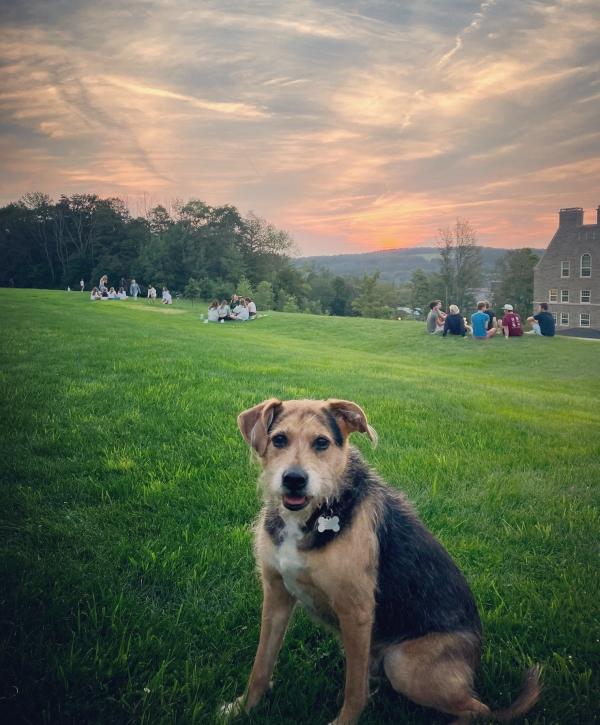
This is the only place where Insiders can show their snouts (whiskers, or beaks) wearing institutional affiliations or school colors. Send us your photos.

ERRATUM: Last week we featured our first presidential pet. Not only did we neglect to include his pronouns, we got his name wrong on the copy that went to non-members. So here's the good boy again. 

Emrys Casey

Emrys Casey (he/him), Colgate University

The Sandbox

Not your typical weekly newsletter. This is a space where presidents and chancellors can say what they really think without fear. Everyone is welcome to read, but only those who have been in the top job can submit to us. The Sandbox, by Rachel Toor, is an exclusive benefit of our paid Insider membership program.


The Sandbox Archive

The Real Text Messages of Lady Presidents

September 19, 2026

Retreat Rights

September 12, 2026

What Does a College Student Look Like?

August 29, 2026

Wackadoodle Newsletter Turns 3

August 22, 2026

Presidents: Quit Yer Whining

August 15, 2026
View All
Advertisement

Company

  • Contact Us
  • About Us
  • Work with Us
  • History
  • Meet the Team
  • Advertise
  • Subscriptions
  • Find a Job
  • Post a Job

Legal

  • Rights & Permissions
  • Privacy
  • Terms of Service
  • Do Not Sell or Share My Personal Information

Newsletter

Create a free account and get higher ed's most essential news, analysis, and career advice delivered to your inbox.

Copyright © 2026 Inside Higher Ed All rights reserved.

  • Menu
  • Insider Dashboard
  • My Account
  • Subscribe
  • Find a Job
  • News
  • Faculty
    • Contingent Faculty
    • Curriculum
    • Teaching
    • Learning & Assessment
    • Diversity & Equity
    • Career Development
    • Tenure
    • Retirement
    • Labor & Unionization
    • Shared Governance
    • Academic Freedom
    • Research
    • Books & Publishing
  • Students
    • Academics
    • Graduate students and Postdocs
    • Retention
    • Financial Aid
    • Careers
    • Residential Life
    • Athletics
    • Free Speech
    • Physical & Mental Health
    • Safety
  • Diversity
    • Race & Ethnicity
    • Sex & Gender
    • Socioeconomics
    • Religion
    • Disability
    • Age
  • Admissions
    • Traditional-Age
    • Adult & Post-Traditional
    • Transfer
    • Graduate
  • Tech & Innovation
    • Teaching & Learning
    • Artificial Intelligence
    • Digital Publishing
    • Data Analytics
    • Libraries
    • Administrative Tech
    • Alternative Credentials
  • Business
    • Financial Health
    • Cost-Cutting
    • Revenue Strategies
    • Academic Programs
    • Physical Campuses
    • Mergers & Collaboration
    • Fundraising
  • Institutions
    • Research Universities
    • Regional Public Universities
    • Community Colleges
    • Private Nonprofit Colleges
    • Minority-Serving Institutions
    • Religious Colleges
    • Women's Colleges
    • Specialized Colleges
    • For-Profit Colleges
  • Governance
    • Executive Leadership
    • Trustees & Regents
    • State Oversight
    • Accreditation
  • Government
    • Politics & Elections
    • Courts
    • Student Aid Policy
    • Science & Research Policy
    • State Policy
    • Colleges & Localities
  • Workplace
    • Employee Satisfaction
    • Remote & Flexible Work
    • Staff Issues
  • Global
    • Study Abroad
    • International Students in U.S.
    • U.S. Colleges in the World
  • Opinion
    • Opinion
  • Views
    • Intellectual Affairs
  • Career Advice
    • Seeking a Faculty Job
    • Advancing in the Faculty
    • Teaching
    • Seeking an Administrative Job
    • Advancing as an Administrator
    • Diversity
  • Columns
    • The Academic Worker
    • Beyond Transfer
    • Call to Action
    • Confessions of a Community College Dean
    • Debatable Ideas
    • Echoes in the Quad
    • Editor’s Note
    • Everything Is Fine
    • Just Visiting
    • Leadership in Higher Education
    • Learning Innovation
    • Online: Trending Now
    • The Public Scholar
    • Resident Scholar
    • Small World
    • Tough Love
  • Letters
  • Hubs
  • Student Success
    • Student Voice
    • Academic Life
    • Health & Wellness
    • The College Experience
    • Life After College
  • Special
  • Podcasts
    • The Key
    • Academic Minute
    • Campus
    • The Pulse
    • Weekly Wisdom
  • Reports & Data
  • Events
  • Quick Takes
  • Solutions
  • Institutional Subscriptions
  • Advertising & Marketing
  • Consulting Services
  • Data & Insights
  • Hiring & Jobs
  • Event Partnerships
  • Campus+
  • More
  • Post a Job
  • Campus
  • About
  • Contact Us