From Rachel Toor
Happy birthday to us. (Where is the cake? Why is there never any cake?)
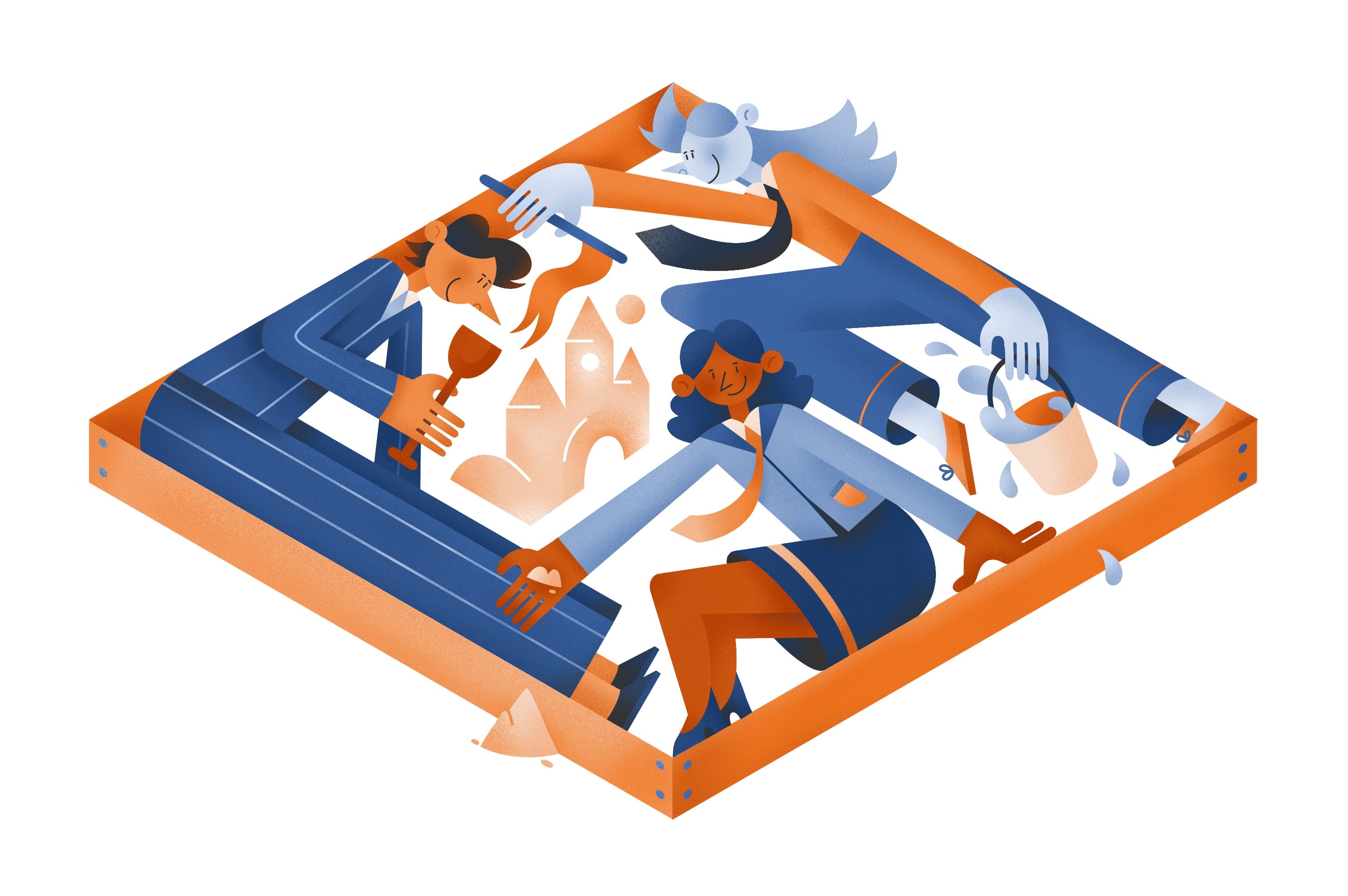
We’re stumbling out of toddlerhood and into the preschool years, doing that developmental thing of trying to move beyond parallel play and understanding it’s important to be able to share toys instead of bonking everyone over the head with pails and shovels.
Originally, we just asked leaders to tell us about their world. Now, as befits a 3-year-old, we want to know why. Why, why, why are you doing things the way you always have? Is it time for all of us to, you know, grow up and start cooperating with our little friends?
Doug Lederman, co-founder of Inside Higher Ed, and I launched this wackadoodle newsletter in August 2023, at a time when no one outside academe really thought too much about college and university presidents. Then, on Oct. 7, the world changed and suddenly everyone was worried about antisemitism (gee, thanks, friends). In December, we had the first of too many icky congressional hearings and suddenly everyone was talking about presidents, and not with love in their hearts.
When you ask busy and high-profile people to write something for no byline, no money, and no ability to promote themselves or their institutions, well, you end up with a self-selected group. Early on, as we tracked new membership, Doug worried the readership and the writer would be all women.
And LGBTQ+ and people of color! I added.
That turned out not to be the case. But after COVID and George Floyd’s murder, many boards congratulated themselves on hiring a “first.” What we’ve seen is that they also did little to support them. It was important for us to make clear that the individual struggles of some leaders weren’t because they weren’t up to the job. Others were having similar challenges, but often not speaking about them.
What made this project easier initially is that I had spent more than a quarter century (how does a person get so old?) writing for another (ahem) higher ed publication and some people felt they knew me, or at least, where I was calling from.
That I was able to get those who must remain fully armored in public to open up privately has less to do with my nonexistent journalistic skills and more with the fact that leaders have no one to really talk to. When people told me about the horrible things they were experiencing, I’d listen, assure them I’d heard similar stories from others not even in their part of the sector, and that it took nothing out of me to allow them a place to vent.
When I got to know presidents well enough (and sometimes not even then), I pushed back and asked hard questions in private. I’ve encouraged some to be more ambitious, others to be less self-satisfied, and have connected people who I think could play well together or just have a good conversation.
In the first year, I thought: Wow. Great timing. Presidents were in the spotlight. I also came to believe, having talked to many who had left before the pandemic, that those who started in 2020 or after had an entirely different job. Each year since then I’ve thought, Holy shit! This is the hardest time ever to try to lead a postsecondary institution.
If we were to start listing the reasons, it could become overwhelming. The protests about Gaza surfaced ideological divides not only between higher ed and the rest of the country, but also on campuses. Budget issues already present because of demographic changes were exacerbated by, let’s just say, um, funding and policy changes from the government. Some states rolled merrily along and others endured bloodred edits to their curricula. Faculty who were burned out and exhausted by having to learn new tricks like teaching online and dealing with pandemic-delayed learners (I know all about that) wanted better working conditions and rose fists in demands for raises and to keep everything the same. Our little bot friends came along and messed up everything we knew about work. And the climate keeps on changing in ways that are scary and expensive.
It’s been a time.
What hasn’t changed much is who wants the job of president (or chancellor). The past three years have been the funnest of my professional life, because those who are called to lead are not the craven and greedy egotists the Angry Eight on the faculty often make them out to be, but mission-driven true believers, optimists to their core. They take the job not for the money, (perceived) power, or presidential residence—or just for those perks, which can be, let’s face it, pretty sweet—but because they want to do right by the students they serve.
The presidency, like pastoral care, is a vocation. I’ve been thinking about that word since taking a study abroad familiarization trip to Italy with a bunch of Catholics. Maybe it’s time we wrest it from both the religious folks and the trade schools and talk to our students about finding not a job or a career but using education as a way to uncover their vocation. The thing that calls them to do right and to do good.
For me, this newsletter, wacky as it is, snarky as I am wont to be, has become just that. It’s a way to use my meager skills (a woodpeckerish curiosity, the persistence of a mosquito, and an occasional ability to write an entertaining sentence) to try to support those doing tough jobs during perilous times. It feels like a calling that my entire zigzaggy career has led me to.
Thanks to every person who has written for no credit or applause (except from me), to the many who don’t ever write but talk honestly to me and share their experiences in ways that are real and vulnerable, and to all those who aren’t in the top job but want to understand what it’s like so that we can all do better in this sector where we don’t get paid as much as we might if we were driven by materialism but truly care about education as a public good.
Since my mission is to serve and protect leaders, no one knows who writes for me. In that way, the gig can feel lonely; I have no real colleagues. I am grateful to the many consultants and experts who are willing to serve as thought partners and explain the corners of higher ed that still confound me.
I do, however, have a boss. Kind of. When Doug approached me to do this, I said I wouldn’t do it alone and he had to be listed as co-founder to shine some credible light on the project and to answer my many, many questions. He left IHE a year later but has never deserted me as a work wife.
In his place came a young (I know that really makes me look old) woman from Oklahoma who’d spent her entire career not in the U.S. The first time she tried to edit me, I threw a hissy fit. Trained as a journalist, Sara Custer was unaccustomed to dealing with a diva who spends hours on a single sentence. It was also not entirely clear what this newsletter was and how it fit into her vision for the future of IHE.
At first, like the faculty member I am, I ranted that she was not the boss of me (I am a freelancer on contract, not an employee) and I sure wasn’t going to let her mess with my pellucid prose and stop using words like “funnest.” I explained that this is different from journalism and often was an asshole cranky about things I felt the reporters and editors missed because they did not, naturally, have access to all the information.
As is the case for many leaders, Sara walked into a challenging situation with an impossible a difficult person to manage. Over the past two years, my respect for her intelligence, her fairness, and her commitment to learning has swollen like the heart of my fellow Grinch. Poor Sara has had to reckon with inheriting a newsletter that is frankly weird, with a creator who is, um, quirky.
After Doug left, I stopped using the editorial “we” because it’s all me. I own every bad opinion and hinky sentence, none of which is a reflection of the views of IHE—over which, to be clear, I have exactly zero influence, including getting anyone coverage or placing opinion pieces. Everything I do is in support of this newsletter and the community I’ve tried to build.
Which is mainly what I aspired to do: create community. I knew what I didn’t want the newsletter to be: a bunch of generic leadership advice and bromides. Given how important it is for presidents to armor themselves to face daily battles, the easiest thing is to write from on high. Most of us feel more comfortable as experts and like to give advice. I sure do. Sometimes presidents can take a slightly more vulnerable step, and instead of using the imperative, they write in the second person, saying “you” when what they really mean is “I.”
“We all diagnose from within our own speciality,” said my former boyfriend when he diagnosed my best friend’s brain aneurysm (and saved her life). My discipline is writing in the first person. The self-help I gravitate to comes in the form of memoir. Not “do this” or even “when you’re looking to hire a provost,” but “here’s how I messed up.” It’s the vivid and specific details that make us feel the lessons being imparted.
This has been a task, getting leaders to write in ways that are uncomfortable for most people (though of course many institutions demand it from their applicants). Some in my circle have learned well and have felt some relief writing it all out. “This has been therapeutic,” I’ve heard 800 times. They trust me to smudge details that could be used against them. Others just don’t want to go there. That’s fine. I still always want to hear what’s going on in their world.
A couple of years ago, Doug met an author at a conference and asked if I’d heard of her. Duh! I told him I loved Kelly Corrigan’s book Tell Me More. It does all the things I want presidents to do in The Sandbox: get real; tell true stories about how you’ve failed with vivid and specific details in a way that show you’re neither a hero nor a loser, just a human; give great advice; and, oh, right, make us laugh. I’ve just listened to that short essay collection a second time. I don’t love corporate-speak leadership books, but this one is worth everyone’s time.
Now, let’s all hope that things on the higher ed front get boring so we can all breathe easier and nobody will need a newsletter like this.