
Inside Higher Ed Home
  • Search
  • Institutional Access

    Your institution provides full access to Inside Higher Ed content.

  • Subscribe
Menu
  • Search
  • Subscribe
  • Insider Dashboard
  • My Account
  • Institutional Access

    Your institution provides full access to Inside Higher Ed content.

    • Menu
    • Subscribe
    • Find a Job
    • News
    • Faculty
      • Contingent Faculty
      • Curriculum
      • Teaching
      • Learning & Assessment
      • Diversity & Equity
      • Career Development
      • Tenure
      • Retirement
      • Labor & Unionization
      • Shared Governance
      • Academic Freedom
      • Research
      • Books & Publishing
    • Students
      • Academics
      • Graduate students and Postdocs
      • Retention
      • Financial Aid
      • Careers
      • Residential Life
      • Athletics
      • Free Speech
      • Physical & Mental Health
      • Safety
    • Diversity
      • Race & Ethnicity
      • Sex & Gender
      • Socioeconomics
      • Religion
      • Disability
      • Age
    • Admissions
      • Traditional-Age
      • Adult & Post-Traditional
      • Transfer
      • Graduate
    • Tech & Innovation
      • Teaching & Learning
      • Artificial Intelligence
      • Digital Publishing
      • Data Analytics
      • Libraries
      • Administrative Tech
      • Alternative Credentials
    • Business
      • Financial Health
      • Cost-Cutting
      • Revenue Strategies
      • Academic Programs
      • Physical Campuses
      • Mergers & Collaboration
      • Fundraising
    • Institutions
      • Research Universities
      • Regional Public Universities
      • Community Colleges
      • Private Nonprofit Colleges
      • Minority-Serving Institutions
      • Religious Colleges
      • Women's Colleges
      • Specialized Colleges
      • For-Profit Colleges
    • Governance
      • Executive Leadership
      • Trustees & Regents
      • State Oversight
      • Accreditation
    • Government
      • Politics & Elections
      • Courts
      • Student Aid Policy
      • Science & Research Policy
      • State Policy
      • Colleges & Localities
    • Workplace
      • Employee Satisfaction
      • Remote & Flexible Work
      • Staff Issues
    • Global
      • Study Abroad
      • International Students in U.S.
      • U.S. Colleges in the World
    • Opinion
    • Views
      • Intellectual Affairs
    • Career Advice
      • Seeking a Faculty Job
      • Advancing in the Faculty
      • Teaching
      • Seeking an Administrative Job
      • Advancing as an Administrator
      • Diversity
    • Columns
      • The Academic Worker
      • Beyond Transfer
      • Call to Action
      • Confessions of a Community College Dean
      • Debatable Ideas
      • Echoes in the Quad
      • Editor’s Note
      • Everything Is Fine
      • Just Visiting
      • Leadership in Higher Education
      • Learning Innovation
      • Online: Trending Now
      • The Public Scholar
      • Resident Scholar
      • Small World
      • Tough Love
    • Letters
    • Hubs
    • Student Success
      • Student Voice
      • Academic Life
      • Health & Wellness
      • The College Experience
      • Life After College
    • Special
    • Podcasts
      • The Key
      • Academic Minute
      • Campus
      • The Pulse
      • Weekly Wisdom
    • Reports & Data
    • Events
    • Quick Takes
    • Solutions
    • Institutional Subscriptions
    • Advertising & Marketing
    • Consulting Services
    • Data & Insights
    • Hiring & Jobs
    • Event Partnerships
    • Campus+
    • More
    • Post a Job
    • Campus
    • About
    • Contact Us
Insider Dashboard
  • About Insider
  • The Sandbox
  • Webcasts
  • Reports
  • About Insider
  • The Sandbox
  • Webcasts
  • Reports
January 27, 2024

Know Your Trustee Types

It is possible that boards are what make the presidency impossible?

By  Rachel Toor

The Sandbox

Inside Higher Ed Insider
Image of three leaders in the corner of an office

From Rachel Toor

At the recent AAC&U meeting, a president friend asked a small group of us if we'd seen the season premiere of Law and Order the night before. 

She described it: A Jewish president stressed by accusations of plagiarism comes upon a group painting a bagel shop with graffiti.

He is stabbed to death.

The motive? He hadn’t made a public statement about, um, well, you know.

That night, after the blood returned to my knuckles, I asked my friend to describe her experience viewing it. She said: 

Perhaps most uncomfortably close to home was the conversation in the president’s apartment after the murder, in which police were trying to get useful information from the president’s widow, who was of little help.  

When asked to describe his state of mind, she said he was "paranoid, frustrated, exhausted."

Exasperated, she told the cops her husband had been a very busy person who worked all the time. She couldn’t keep track of all his obligations and events. They’d be better off asking his chief of staff these kinds of questions, she said.  

Both women—the wife and the chief of staff—were accustomed to the president being the target of abuse.

I couldn’t help but think about how my spouse would reply to police questions if I were murdered on the job. It made me deeply uncomfortable to imagine him being devastated but not surprised.  

Do you know where the president was tonight? I have no idea. She's at events almost every night.

What was the president's state of mind recently? Worn down, worried, concerned about her safety.

Is there anyone who would want to hurt the president? Just open the president's inbox and you'll find plenty of possible suspects.

And, like the wife on the show, it's very likely my spouse would refer the police to my chief of staff for details.

It has become an unfortunate reality that college and university presents are targets of violent threats. I suspect many of us would be able to point to at least a handful of emails or letters that our institutions would need to turn over to police in the event of an investigation following a murder. 

And it’s not just me. My staff also field threatening calls and messages, absorbing the second-hand vitriol.

Wouldn't it be nice if this season of Law and Order turned out to be less ripped-from-the-headlines and more like a documentary showing a university board hiring a new president and then not supporting the person they select. Or reveal just how little many board members—and donors—understand about higher ed. 

Turns out the writer/creator of Law and Order, Dick Wolf, called in October for the resignation for the president of his alma mater, Penn, to which he is/was a major donor.

Some presidents tell me they have great relationships with their boards. Some are fortunate to have former presidents serving, and if they're lucky, the "right" number of lawyers. (Just one or more than two so there's a tie-breaker when they fight with each other.) Some leaders feel supported and understood by their chair, though there are also plenty who were hired by someone whose term soon ended.

Recently I spent an hour and a half on the phone listening to a current leader talk about a first presidency. I heard horrifying details about what had happened.

I listened. The president couldn’t see me nodding along, but I said, yes, yes. And sometimes, oh. And sometimes, oh shit. 

At the end, I said I was so sorry this happened to her and that I’ve heard similar stories from other presidents and chancellors, including one who wrote about his experiences for The Sandbox last fall. 

Neither of these first-time presidents had been able to have meaningful conversations about boards; they didn’t realize how similar bad board stories are. Presidents often say they had no idea of what “normal” board behavior was when they were members of the cabinet. You don’t last long as a leader if you trash your current boss(es).

Often a board says it wants a “change agent” but doesn’t want to change. People like people who are like them—trustees tend to be masters of the universe, not nerdy professor types. Just fire those idiots, they say about obstreperous faculty members. Cut programs! But leave football alone. 

Board members put their hands on (some) presidents' or staff members asses. Boards tell presidents they're too emotional. Too strident. Too intense. Their clothes are too tight. Too sloppy. Skirts are too short. Too long. Get a personal shopper, presidents are told. Oh, and you laugh too loud or need to smile more. 

It seems to be a rare board that understands how higher ed actually works.

And who could blame them? It's a super weird industry. I mean, shared governance? Educating a board can be up to the person who reports to them. That's a heavy lift. Plus, there's no meaningful oversight when they go astray.

There are plenty of great consultants and even an entire association devoted to helping boards. But the fact is, as is often the case in life, that those who are determined to get better are usually already pretty good and atypically reflective, and the ones who most need help think they're doing just fine. 

How do you train powerful, successful, professional people who don't realize they may in fact be the problem—and who have the power to fire you?
Email me


Please Take Our Survey!

Note from Doug: If you're a current president or chancellor, please click this link to participate in IHE's annual survey of campus leaders. If you're not, please send this to a president you know to take the survey. The more leaders who participate, the better our data. Thanks in advance for your help.

TAKE THE SURVEY


A Typology of Trustees

Many leaders say they follow the “No Assholes” rule when they hire. No one wants to be put in that category.

But perhaps a bigger problem is that assholes often don’t know they’re assholes. They say or think, “I’m just doing my job.” Or “I’m a critical thinker.” Or “What are you talking about? I’m not the problem, you are.”

Pat Conroy, whom I loved more than any man I've never actually met, wrote in his memoir, "My father may be the only person in the history of the world who changed himself because he despised a character in literature who struck chords of horror in himself that he could not face. He had the best second act in the history of fathering." 

In a different kind of book,The Practitioner’s Guide to Governance as Leadership, Cathy Trower—one of many professional board whisperers—provides a taxonomy of different board members. 

You could use what follows to play Bingo during board meetings or, if you're on Zoom, a drinking game, each time you identify one of the following types. I'm tempted to do this during faculty senate meetings, though I worry my own past behavior might have, at times, caused others to drink.

You can forward this to your trustees and say how happy you are not to have anyone from any of these groups on your board. 

Or perhaps they will read it and have the same experience as Pat Conroy's dad did when he read The Great Santini. They may find it within themselves to change.

Bully: Verbally assaults fellow board members and staff members with complete disregard to affect and effect. 

Grenade launcher or flame thrower: Has no self-control and enjoys maximum disruption.

Dominator or air hog: Will not let anyone else share airtime; interrupts and talks over others.

Naysayer: Pessimistic and full of ideas about why something will not work; seems to take pleasure in shooting down the ideas of others.

Bloviator: Speaks at length and in a pompous manner. 

Loose cannon: A slight variation of the grenade launcher—is completely unpredictable, but not necessarily vicious.

Handler: Forms alliances and coalitions outside the boardroom to orchestrate a personally desired outcome.

Micromanager: Intrudes into operations and often seeks out private conversations with members of the senior staff.

Clueless wonder: Makes completely off-the-wall comments that have no bearing on anything the board is trying to address.

Bobblehead: Nods and smiles in apparent agreement with everything.

Passive: Participates minimally and is unwilling to engage when views are challenged.

Disengaged: Sits silently throughout meetings, adding no value whatsoever.

Go Ahead and Share

Please forward this newsletter to anyone you think might benefit from seeing it. We're  looking for presidents (current and former) willing to write candidly, authentically, and anonymously for us, and for readers who are interested in understanding and supporting them. To sign up, click here. 

JOIN NOW


We believe in diversity, equity, and inclusion. We believe in access. We know the field isn’t level but think everyone should get to play—not just those with pedigrees and good breeding but also the scrappier ones who may have had a rougher start in life. This applies to institutions (community colleges as well as research universities), leaders (the Ivy-all-the-ways and those who came from less “traditional” backgrounds), and animal companions (we're not speciest).

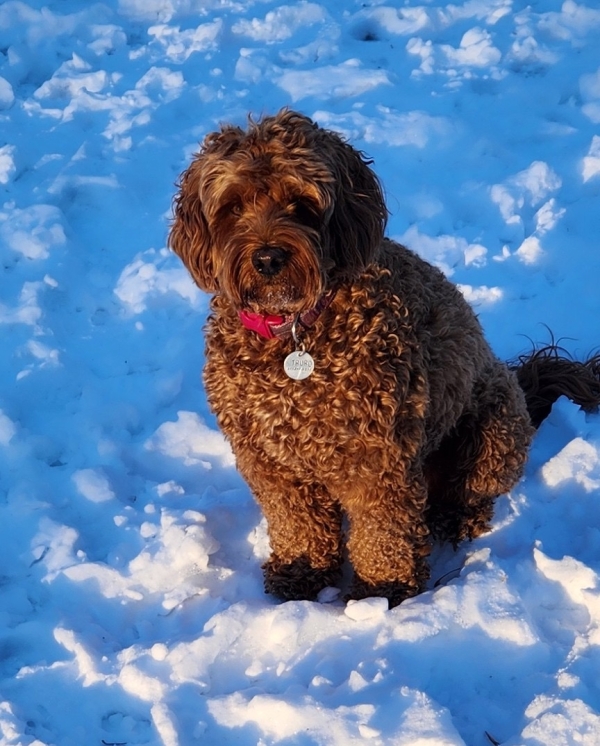
Truro in snow

Truro Lederman Scharff, toughing it out in French toast weather.

The Sandbox

Not your typical weekly newsletter. This is a space where presidents and chancellors can say what they really think without fear. Everyone is welcome to read, but only those who have been in the top job can submit to us. The Sandbox, by Rachel Toor, is an exclusive benefit of our paid Insider membership program.


The Sandbox Archive

The Real Text Messages of Lady Presidents

September 19, 2026

Retreat Rights

September 12, 2026

What Does a College Student Look Like?

August 29, 2026

Wackadoodle Newsletter Turns 3

August 22, 2026

Presidents: Quit Yer Whining

August 15, 2026
View All
Advertisement

Company

  • Contact Us
  • About Us
  • Work with Us
  • History
  • Meet the Team
  • Advertise
  • Subscriptions
  • Find a Job
  • Post a Job

Legal

  • Rights & Permissions
  • Privacy
  • Terms of Service
  • Do Not Sell or Share My Personal Information

Newsletter

Create a free account and get higher ed's most essential news, analysis, and career advice delivered to your inbox.

Copyright © 2026 Inside Higher Ed All rights reserved.

  • Menu
  • Insider Dashboard
  • My Account
  • Subscribe
  • Find a Job
  • News
  • Faculty
    • Contingent Faculty
    • Curriculum
    • Teaching
    • Learning & Assessment
    • Diversity & Equity
    • Career Development
    • Tenure
    • Retirement
    • Labor & Unionization
    • Shared Governance
    • Academic Freedom
    • Research
    • Books & Publishing
  • Students
    • Academics
    • Graduate students and Postdocs
    • Retention
    • Financial Aid
    • Careers
    • Residential Life
    • Athletics
    • Free Speech
    • Physical & Mental Health
    • Safety
  • Diversity
    • Race & Ethnicity
    • Sex & Gender
    • Socioeconomics
    • Religion
    • Disability
    • Age
  • Admissions
    • Traditional-Age
    • Adult & Post-Traditional
    • Transfer
    • Graduate
  • Tech & Innovation
    • Teaching & Learning
    • Artificial Intelligence
    • Digital Publishing
    • Data Analytics
    • Libraries
    • Administrative Tech
    • Alternative Credentials
  • Business
    • Financial Health
    • Cost-Cutting
    • Revenue Strategies
    • Academic Programs
    • Physical Campuses
    • Mergers & Collaboration
    • Fundraising
  • Institutions
    • Research Universities
    • Regional Public Universities
    • Community Colleges
    • Private Nonprofit Colleges
    • Minority-Serving Institutions
    • Religious Colleges
    • Women's Colleges
    • Specialized Colleges
    • For-Profit Colleges
  • Governance
    • Executive Leadership
    • Trustees & Regents
    • State Oversight
    • Accreditation
  • Government
    • Politics & Elections
    • Courts
    • Student Aid Policy
    • Science & Research Policy
    • State Policy
    • Colleges & Localities
  • Workplace
    • Employee Satisfaction
    • Remote & Flexible Work
    • Staff Issues
  • Global
    • Study Abroad
    • International Students in U.S.
    • U.S. Colleges in the World
  • Opinion
    • Opinion
  • Views
    • Intellectual Affairs
  • Career Advice
    • Seeking a Faculty Job
    • Advancing in the Faculty
    • Teaching
    • Seeking an Administrative Job
    • Advancing as an Administrator
    • Diversity
  • Columns
    • The Academic Worker
    • Beyond Transfer
    • Call to Action
    • Confessions of a Community College Dean
    • Debatable Ideas
    • Echoes in the Quad
    • Editor’s Note
    • Everything Is Fine
    • Just Visiting
    • Leadership in Higher Education
    • Learning Innovation
    • Online: Trending Now
    • The Public Scholar
    • Resident Scholar
    • Small World
    • Tough Love
  • Letters
  • Hubs
  • Student Success
    • Student Voice
    • Academic Life
    • Health & Wellness
    • The College Experience
    • Life After College
  • Special
  • Podcasts
    • The Key
    • Academic Minute
    • Campus
    • The Pulse
    • Weekly Wisdom
  • Reports & Data
  • Events
  • Quick Takes
  • Solutions
  • Institutional Subscriptions
  • Advertising & Marketing
  • Consulting Services
  • Data & Insights
  • Hiring & Jobs
  • Event Partnerships
  • Campus+
  • More
  • Post a Job
  • Campus
  • About
  • Contact Us