
Inside Higher Ed Home
  • Search
  • Institutional Access

    Your institution provides full access to Inside Higher Ed content.

  • Subscribe
Menu
  • Search
  • Subscribe
  • Insider Dashboard
  • My Account
  • Institutional Access

    Your institution provides full access to Inside Higher Ed content.

    • Menu
    • Subscribe
    • Find a Job
    • News
    • Faculty
      • Contingent Faculty
      • Curriculum
      • Teaching
      • Learning & Assessment
      • Diversity & Equity
      • Career Development
      • Tenure
      • Retirement
      • Labor & Unionization
      • Shared Governance
      • Academic Freedom
      • Research
      • Books & Publishing
    • Students
      • Academics
      • Graduate students and Postdocs
      • Retention
      • Financial Aid
      • Careers
      • Residential Life
      • Athletics
      • Free Speech
      • Physical & Mental Health
      • Safety
    • Diversity
      • Race & Ethnicity
      • Sex & Gender
      • Socioeconomics
      • Religion
      • Disability
      • Age
    • Admissions
      • Traditional-Age
      • Adult & Post-Traditional
      • Transfer
      • Graduate
    • Tech & Innovation
      • Teaching & Learning
      • Artificial Intelligence
      • Digital Publishing
      • Data Analytics
      • Libraries
      • Administrative Tech
      • Alternative Credentials
    • Business
      • Financial Health
      • Cost-Cutting
      • Revenue Strategies
      • Academic Programs
      • Physical Campuses
      • Mergers & Collaboration
      • Fundraising
    • Institutions
      • Research Universities
      • Regional Public Universities
      • Community Colleges
      • Private Nonprofit Colleges
      • Minority-Serving Institutions
      • Religious Colleges
      • Women's Colleges
      • Specialized Colleges
      • For-Profit Colleges
    • Governance
      • Executive Leadership
      • Trustees & Regents
      • State Oversight
      • Accreditation
    • Government
      • Politics & Elections
      • Courts
      • Student Aid Policy
      • Science & Research Policy
      • State Policy
      • Colleges & Localities
    • Workplace
      • Employee Satisfaction
      • Remote & Flexible Work
      • Staff Issues
    • Global
      • Study Abroad
      • International Students in U.S.
      • U.S. Colleges in the World
    • Opinion
    • Views
      • Intellectual Affairs
    • Career Advice
      • Seeking a Faculty Job
      • Advancing in the Faculty
      • Teaching
      • Seeking an Administrative Job
      • Advancing as an Administrator
      • Diversity
    • Columns
      • The Academic Worker
      • Beyond Transfer
      • Call to Action
      • Confessions of a Community College Dean
      • Debatable Ideas
      • Echoes in the Quad
      • Editor’s Note
      • Everything Is Fine
      • Just Visiting
      • Leadership in Higher Education
      • Learning Innovation
      • Online: Trending Now
      • The Public Scholar
      • Resident Scholar
      • Small World
      • Tough Love
    • Letters
    • Hubs
    • Student Success
      • Student Voice
      • Academic Life
      • Health & Wellness
      • The College Experience
      • Life After College
    • Special
    • Podcasts
      • The Key
      • Academic Minute
      • Campus
      • The Pulse
      • Weekly Wisdom
    • Reports & Data
    • Events
    • Quick Takes
    • Solutions
    • Institutional Subscriptions
    • Advertising & Marketing
    • Consulting Services
    • Data & Insights
    • Hiring & Jobs
    • Event Partnerships
    • Campus+
    • More
    • Post a Job
    • Campus
    • About
    • Contact Us
Insider Dashboard
  • About Insider
  • The Sandbox
  • Webcasts
  • Reports
  • About Insider
  • The Sandbox
  • Webcasts
  • Reports
March 22, 2025

Letter from a Region of My Mind

Your faithful Sandbox correspondent makes a trip to D.C. and has a lot of thoughts.

By  Rachel Toor

The Sandbox

Inside Higher Ed Insider
Image representing puzzles

From Rachel Toor

Last week I got a lovely note from a president saying, “Could you ever have imagined how vital The Sandbox would become?” In truth, I don't have a good sense of our impact, but it’s always wonderful to hear from readers. I’m grateful to have a network of presidents from institutions of all stripes who trust me with their confidences to make visible the challenges faced by today’s leaders.

This week, I’m taking advantage of my status as founder/author/editor/sole employee to throw down some ideas I can’t get out of my head. As Pascal quipped, I would have written you a shorter letter, but I didn’t have the time. I promise next week to bring you more anonymous presidential thoughts.

Letter from a Region of My Mind

Cover of Stoner by John Williams


Working in journalism left Doug Lederman little time to read for anything but information, so when he stepped away from 90-hour work weeks at Inside Higher Ed he told me he wanted to watch less Netflix. I said, “Friend, you came to the right place.” Recommending reading is pretty much the only area where I can make solid contributions these days.

I started Doug out with things I knew he’d like. Chad Harbach’s The Art of Fielding was an early favorite. I moved him along to Jess Walter’s Beautiful Ruins, The Friend by Sigrid Nunez, James (Percival Everett, not Henry), Meg Wolitzer’s The Interestings, and loaded him onto the Louise Penny train.

But just before I headed to D.C. last week, I assigned him a novel I’d been wanting to re-read and liked the idea of book-clubbing with him: John Williams’s beautiful and heartbreaking Stoner. I’ve often given Doug a hard time about—well, everything—but especially the fact that he’s never actually been in higher ed. He’s only peered in from outside with a reporter’s magnifying glass, exposing our flaws and fault lines, doing his essential duty as a journalist.

When Doug asked me to work with him as a thought partner on this newsletter, he wanted to bring tough love to leaders. He confessed to having a case of the f*ck-its, disappointed that higher ed has been so slow to change and unwilling to take responsibility for some missteps. As we know, disappointment can only come from love, and it is much harder for recipients to bear.

I responded in my typically tactful fashion, asking him, “Who the f*ck are you to have a case of the f*ck-its. Do not speak to me of the f*ck-its! Have you had to read millions of pages of academic monographs? Have you heard academics complain that their names were too small on book covers? Have you denied thousands of qualified applicants admission to their dream college, or sat through interminable faculty senate meetings group copyediting policies? Have you taught classes that flop or graduate students who just can’t?”

In other words, I told the co-founder of IHE he had little idea what it was like to be in higher ed, especially from the perspective of a faculty or staff member. Given his role and prominence in the industry, Doug’s attention is always sought after, a high-value treat. In our world, he is beef jerky, not a Milk-Bone.

I thought it time for him to use his leisure reading to get a deeper understanding of what it’s like to be a regular professor. Not an oversize character like Morris Zapp (my old boss, Stanley) or even Lucky Hank Devereaux (or Lucky Jim).

Stoner follows the fictional life and career of an English professor at the University of Missouri in the early part of the last century. Early in the novel, and just before the sinking of the Lusitania, the sharpest of a group of three young academics asks his fellows, “Have you gentlemen ever considered the question of the true nature of the University?”

Mr. Stoner “sees it as a great repository, like a library or a whorehouse, where men come of their free will and select that which will complete them, where all work together like little bees in a common hive.” Mr. Finch, with his “simple mind,” sees it as “a kind of spiritual sulphur-and-molasses that you administer every fall to get the little bastards through another winter.” Finch goes on, naturally, to become a dean.

But they are both wrong, claims the character named Masters. The university ”is an asylum .... a rest home, for the infirm, the aged, the discontent, the otherwise incompetent.” His self-diagnosis: ”I'm too bright for the world, and I won’t keep my mouth shut about it.” He concludes, ”But bad as we are, we’re better than those on the outside, in the muck, the poor bastards of the world. We do no harm, we say what we want, and we get paid for it.”

The book, published in 1965, presents characters that feel so current and vibrant you can imagine having a cocktail with them. In the times we now find ourselves, Stoner may become popular again—but not for all the right reasons.

I have friends who have long said they’re done reading things by dead white men. When Doug and I were in college, that was pretty much the entire curriculum, with the exception of the 19th century gals, an Emily Dickinson here, a Frederick Douglass there. This reluctance is understandable, given how long the canon excluded previously silenced voices. Yet, I don’t discriminate. Stoner offers profound insights into institutional structures that persist today.

These thoughts were on my mind as I finished my re-read just before our flight to D.C., where institutional structures of a different kind awaited us in marble and glass.

We had half a day before an event and my husband, Toby, and I wanted to be tourists. It had not been my intention to speed-walk through four museums in 5 hours. (Toby could spend hours in front of one painting, but he loves me and is a good sport.)

My childhood consisted of trips downstate to see grandparents in New York City, which often involved visits to museums. A favorite was the one that hosted the squid and the whale. Unconsciously, I bought into the primate visions described by Donna Haraway about hierarchies—her critique of how science museums construct narratives of power and evolution that shape our understanding.

Fifty years later, I was eager to see what had changed. We started at Natural History, moved on to American History, then African-American, and ended up at the Holocaust. In March 2025, this journey was not, it won’t surprise you to learn, an uplifting experience. The museums, like higher education itself, told a complex story of American identity now under dire threat.

I sped through to parse the presentation. How did the curators choose to tell the stories, some of which I know well, and which, as an adult, I would always prefer to read? Since I began my career publishing books in American history at Oxford University Press, I’ve imbibed a decent amount of quality scholarship.

When I became an acquisitions editor at Duke University Press in 1991, I was intrigued by the work of scholars like Kimberlé Crenshaw, Patricia Williams, Mari Matsuda, Derrick Bell, and other theorists who used narrative to examine how our legal system perpetuated structural inequalities. Most people weren't reading law journals back then, and it took a while for those ideas to make it into the mainstream

Academe cranked open the curriculum to face historical truths not always self-evident: We are a country built on a commitment to diversity, equity, and inclusion. At times we fell short of the mark, but the arc of the universe is long, and we were taught the direction in which it bends.

Except. The rise to power documented in that last somber building we visited reads to me like a blueprint for what's happening today. Before I could remember not knowing it, my father drilled into me that what it means to be a Jew is there’s always someone who wants to put you in an oven. That was made tangible by the numbers I saw tattooed on the arm of great-grandpa Max. 

How much longer will busloads of boisterous students milling around these repositories of culture be able to learn our history? When will the white-washing take hold so that the ideas contained in the curators’ vision—in the works we’ve published since the latter part of the last century—are mummified?

One of many chilling moments: coming on a small story I knew from the film Who Will Write Our History? Historian Emanuel Ringelblum organized Jews in the Warsaw Ghetto in 1939 to document unprecedented actions. He collected materials, placed them in milk cans, and buried them throughout the city. The archive known as the Oneg Shabbat is housed in Jerusalem at Yad Vashem.

It was impossible not to feel that reporters at IHE and other media outlets are busting their butts at a similar task: chronicling the last days of an era of inclusion.

How long before these exhibits come down, replaced by gold toilets in buildings repurposed for hotels and casinos? As my IHE colleague Kathryn Palmer reported this week, it’s clear that’s not an ungrounded fear.

Just as the bright shining moment of Camelot disappeared for a previous generation, many of us already look back on Hamilton with nostalgia. A too-quick tour of museums in our nation’s capital filled me with love for America and the things that made us great. When I left, all I felt was grief. What happens if we don’t rise to today’s challenge?

This sobering experience in D.C. brought me back to my conversation with Doug about higher education’s resistance to change. A reading of Stoner should not feel as resonant and familiar as it does. Little about faculty structure and the ethos of academe has evolved in the last century.

Walking through those endangered halls of American memory, what Doug has long been saying to leaders is urgent: We need more than just better storytelling about higher education—we need to fundamentally reimagine it. And we need to do it now.

The buried milk cans of our moment will someday be unearthed. The articles, reports, and assessments documenting higher education’s struggles will serve as testimony to what we did—or failed to do—in this critical period. My only hope is that they'll reveal how current leadership finally broke free from institutional inertia.

https://bit.ly/4iZ5wlB

Want to advertise here?

If you want to get this email, please become a member

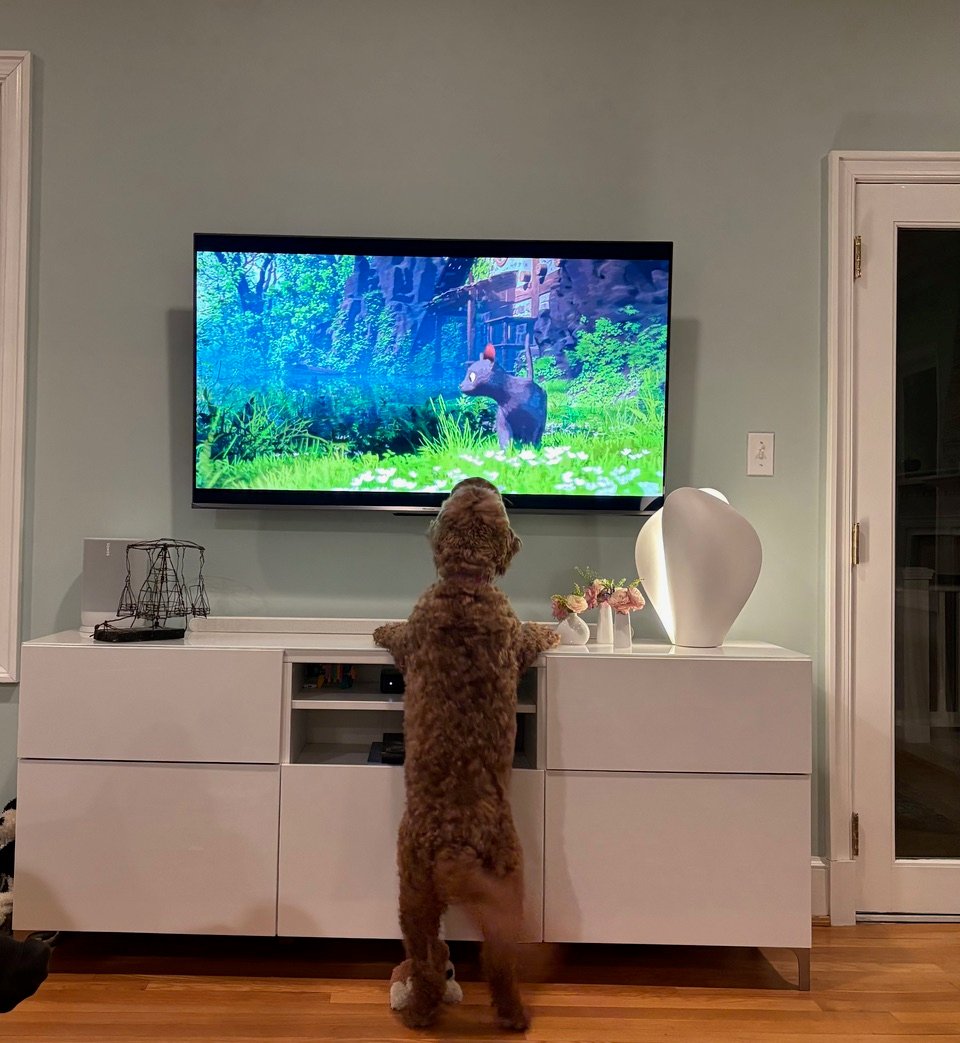
Highlight of D.C. visit: watching the Academy Award-winning feature, Flow. Truro Lederman Scharff found it riveting.

Photo of dog watching TV.
JOIN TODAY


The Sandbox

Not your typical weekly newsletter. This is a space where presidents and chancellors can say what they really think without fear. Everyone is welcome to read, but only those who have been in the top job can submit to us. The Sandbox, by Rachel Toor, is an exclusive benefit of our paid Insider membership program.


The Sandbox Archive

Retreat Rights

September 12, 2026

What Does a College Student Look Like?

August 29, 2026

Wackadoodle Newsletter Turns 3

August 22, 2026

Presidents: Quit Yer Whining

August 15, 2026

“Life Changes in the Instant”

August 8, 2026
View All
Advertisement

Company

  • Contact Us
  • About Us
  • Work with Us
  • History
  • Meet the Team
  • Advertise
  • Subscriptions
  • Find a Job
  • Post a Job

Legal

  • Rights & Permissions
  • Privacy
  • Terms of Service
  • Do Not Sell or Share My Personal Information

Newsletter

Create a free account and get higher ed's most essential news, analysis, and career advice delivered to your inbox.

Copyright © 2026 Inside Higher Ed All rights reserved.

  • Menu
  • Insider Dashboard
  • My Account
  • Subscribe
  • Find a Job
  • News
  • Faculty
    • Contingent Faculty
    • Curriculum
    • Teaching
    • Learning & Assessment
    • Diversity & Equity
    • Career Development
    • Tenure
    • Retirement
    • Labor & Unionization
    • Shared Governance
    • Academic Freedom
    • Research
    • Books & Publishing
  • Students
    • Academics
    • Graduate students and Postdocs
    • Retention
    • Financial Aid
    • Careers
    • Residential Life
    • Athletics
    • Free Speech
    • Physical & Mental Health
    • Safety
  • Diversity
    • Race & Ethnicity
    • Sex & Gender
    • Socioeconomics
    • Religion
    • Disability
    • Age
  • Admissions
    • Traditional-Age
    • Adult & Post-Traditional
    • Transfer
    • Graduate
  • Tech & Innovation
    • Teaching & Learning
    • Artificial Intelligence
    • Digital Publishing
    • Data Analytics
    • Libraries
    • Administrative Tech
    • Alternative Credentials
  • Business
    • Financial Health
    • Cost-Cutting
    • Revenue Strategies
    • Academic Programs
    • Physical Campuses
    • Mergers & Collaboration
    • Fundraising
  • Institutions
    • Research Universities
    • Regional Public Universities
    • Community Colleges
    • Private Nonprofit Colleges
    • Minority-Serving Institutions
    • Religious Colleges
    • Women's Colleges
    • Specialized Colleges
    • For-Profit Colleges
  • Governance
    • Executive Leadership
    • Trustees & Regents
    • State Oversight
    • Accreditation
  • Government
    • Politics & Elections
    • Courts
    • Student Aid Policy
    • Science & Research Policy
    • State Policy
    • Colleges & Localities
  • Workplace
    • Employee Satisfaction
    • Remote & Flexible Work
    • Staff Issues
  • Global
    • Study Abroad
    • International Students in U.S.
    • U.S. Colleges in the World
  • Opinion
    • Opinion
  • Views
    • Intellectual Affairs
  • Career Advice
    • Seeking a Faculty Job
    • Advancing in the Faculty
    • Teaching
    • Seeking an Administrative Job
    • Advancing as an Administrator
    • Diversity
  • Columns
    • The Academic Worker
    • Beyond Transfer
    • Call to Action
    • Confessions of a Community College Dean
    • Debatable Ideas
    • Echoes in the Quad
    • Editor’s Note
    • Everything Is Fine
    • Just Visiting
    • Leadership in Higher Education
    • Learning Innovation
    • Online: Trending Now
    • The Public Scholar
    • Resident Scholar
    • Small World
    • Tough Love
  • Letters
  • Hubs
  • Student Success
    • Student Voice
    • Academic Life
    • Health & Wellness
    • The College Experience
    • Life After College
  • Special
  • Podcasts
    • The Key
    • Academic Minute
    • Campus
    • The Pulse
    • Weekly Wisdom
  • Reports & Data
  • Events
  • Quick Takes
  • Solutions
  • Institutional Subscriptions
  • Advertising & Marketing
  • Consulting Services
  • Data & Insights
  • Hiring & Jobs
  • Event Partnerships
  • Campus+
  • More
  • Post a Job
  • Campus
  • About
  • Contact Us