
Inside Higher Ed Home
  • Search
  • Institutional Access

    Your institution provides full access to Inside Higher Ed content.

  • Subscribe
Menu
  • Search
  • Subscribe
  • Insider Dashboard
  • My Account
  • Institutional Access

    Your institution provides full access to Inside Higher Ed content.

    • Menu
    • Subscribe
    • Find a Job
    • News
    • Faculty
      • Contingent Faculty
      • Curriculum
      • Teaching
      • Learning & Assessment
      • Diversity & Equity
      • Career Development
      • Tenure
      • Retirement
      • Labor & Unionization
      • Shared Governance
      • Academic Freedom
      • Research
      • Books & Publishing
    • Students
      • Academics
      • Graduate students and Postdocs
      • Retention
      • Financial Aid
      • Careers
      • Residential Life
      • Athletics
      • Free Speech
      • Physical & Mental Health
      • Safety
    • Diversity
      • Race & Ethnicity
      • Sex & Gender
      • Socioeconomics
      • Religion
      • Disability
      • Age
    • Admissions
      • Traditional-Age
      • Adult & Post-Traditional
      • Transfer
      • Graduate
    • Tech & Innovation
      • Teaching & Learning
      • Artificial Intelligence
      • Digital Publishing
      • Data Analytics
      • Libraries
      • Administrative Tech
      • Alternative Credentials
    • Business
      • Financial Health
      • Cost-Cutting
      • Revenue Strategies
      • Academic Programs
      • Physical Campuses
      • Mergers & Collaboration
      • Fundraising
    • Institutions
      • Research Universities
      • Regional Public Universities
      • Community Colleges
      • Private Nonprofit Colleges
      • Minority-Serving Institutions
      • Religious Colleges
      • Women's Colleges
      • Specialized Colleges
      • For-Profit Colleges
    • Governance
      • Executive Leadership
      • Trustees & Regents
      • State Oversight
      • Accreditation
    • Government
      • Politics & Elections
      • Courts
      • Student Aid Policy
      • Science & Research Policy
      • State Policy
      • Colleges & Localities
    • Workplace
      • Employee Satisfaction
      • Remote & Flexible Work
      • Staff Issues
    • Global
      • Study Abroad
      • International Students in U.S.
      • U.S. Colleges in the World
    • Opinion
    • Views
      • Intellectual Affairs
    • Career Advice
      • Seeking a Faculty Job
      • Advancing in the Faculty
      • Teaching
      • Seeking an Administrative Job
      • Advancing as an Administrator
      • Diversity
    • Columns
      • The Academic Worker
      • Beyond Transfer
      • Call to Action
      • Confessions of a Community College Dean
      • Debatable Ideas
      • Echoes in the Quad
      • Editor’s Note
      • Everything Is Fine
      • Just Visiting
      • Leadership in Higher Education
      • Learning Innovation
      • Online: Trending Now
      • The Public Scholar
      • Resident Scholar
      • Small World
      • Tough Love
    • Letters
    • Hubs
    • Student Success
      • Student Voice
      • Academic Life
      • Health & Wellness
      • The College Experience
      • Life After College
    • Special
    • Podcasts
      • The Key
      • Academic Minute
      • Campus
      • The Pulse
      • Weekly Wisdom
    • Reports & Data
    • Events
    • Quick Takes
    • Solutions
    • Institutional Subscriptions
    • Advertising & Marketing
    • Consulting Services
    • Data & Insights
    • Hiring & Jobs
    • Event Partnerships
    • Campus+
    • More
    • Post a Job
    • Campus
    • About
    • Contact Us
Insider Dashboard
  • About Insider
  • The Sandbox
  • Webcasts
  • Reports
  • About Insider
  • The Sandbox
  • Webcasts
  • Reports
December 21, 2024

‘One Last Time’

Twenty years after co-founding Inside Higher Ed, Doug Lederman teaches us how to say goodbye. (Though his next chapter won’t be sitting under a vine and fig tree.)

By  Rachel Toor

The Sandbox

Inside Higher Ed Insider
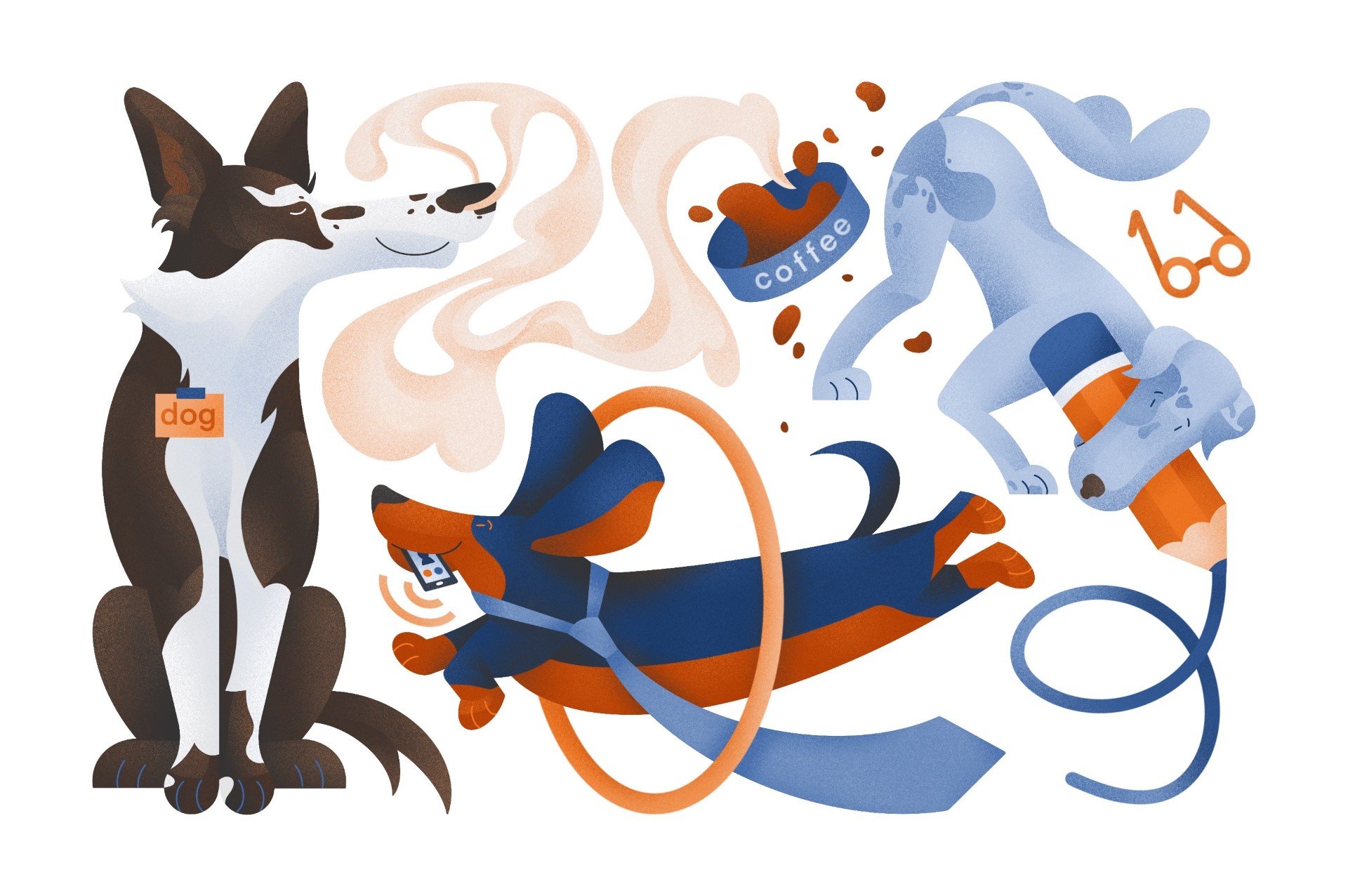
Cartoon of dogs

From Rachel Toor

Do us a solid and, if you haven’t already, take a few moments to fill out our presidents' survey with Hanover Research. Your insights matter: The findings will be presented at ACE early next year and will help us better cover what you do throughout 2025. And while those results are seriously anonymous (even to us), I’m considering launching my own poll of Sandbox truth tellers: things like, “How has your appearance changed during your presidency?” and “What’s the ickiest thing a donor has ever said to you?”

🥂

If you’re planning to attend the Council of Independent Colleges' Presidents Institute in San Antonio next month, we will be hosting a reception for our Insider members with the generous support of our friends at WittKieffer. Come meet our no-longer-so-new editor-in-chief, Sara Custer. Bring spouses. If you have president friends who aren’t members, forward this email and encourage them to join (and then I’ll liquor them up for off-the-record Sandbox stories).

🥂

We will be on a publishing break until Jan. 4. Wishing you all the best for whatever holidays you celebrate. Or, at least, some sleep.

🥂

Our Saturday morning readership knows that not only did Doug co-found Inside Higher Ed with the zany idea of putting journalistic content about our staid industry online and for free, he is also the work wife/éminence grise behind this zany newsletter.

Even though Doug is no longer on the payroll, he will continue to advise while we walk our dogs on opposite sides of the country. Now, free from journalistic constraint, he has, in the words of one former university president, been restored his First Amendment rights. So I fired off some questions.

(Note: Some presidents are having fun playing with AI.)
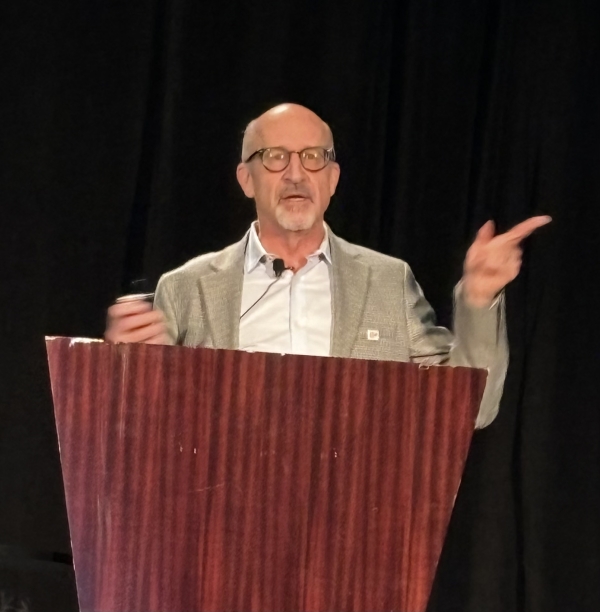
The Sandbox Co-Founders’ Last (Public) Convo

RT: When you all started IHE, the place you’d left was the only game in town for covering higher ed nationally. What was the need you saw that wasn’t being served? 

DL: The Chronicle of Higher Education (we can name it!) did lots of good work that many people in higher ed didn’t see either because (a) they couldn’t afford the increasingly expensive subscription price or (b) they felt excluded from the Chronicle’s orbit, which at the time focused on research universities, the tenured faculty, and the Northeast. We thought community college employees, adjunct professors, grad students, and others were just as entitled to high-quality news and commentary, and we worked internally to try to get the Chronicle to serve them better. The powers that be there weren’t ready to change, so we decided to see if we could figure out another way to do that. It wasn’t easy, but we made it happen.

RT: How has the higher ed media landscape changed in the last two decades? 

DL: It has both expanded and contracted. Many more publications cover higher education than once was the case, although many of them remain focused on a narrow slice of highly selective, wealthy colleges and universities, which helps drive public perceptions that higher ed is unaffordable and inaccessible. At the same time, the media landscape as a whole has become much more fragmented and fragile, such that many people get their news about higher education—as about other things—from sources that have a clear political perspective or ideological bias.

RT: What’s the readership of IHE? 

DL: Depends how you count. More than 250,000 receive our Daily News Update each weekday, and another 50,000+ receive our weekly newsletter. We have about 1.5 million unique users come to the website each month. And that audience is more diverse—by job title, institution type, demographics, age—than any other higher ed media publication. Truly a big tent.

RT: What are you most proud of? 

DL: My children. Oh, you mean related to Inside Higher Ed (my other child)? I’m proud of the many thousands of people we’ve helped do their jobs better because they can see around corners at what might be coming at them tomorrow or next month; the professors and administrators we’ve helped get better jobs; the inequities and unfairnesses we’ve helped address by shining a light on and prompting institutions and governments to rethink. And at Inside Higher Ed itself, the many talented people we’ve hired and nurtured, who’ve made us (and sometimes the journalism organizations they’ve gone on to) better.

RT: What do you wish you’d been able to do? 

DL: Fix all of higher education’s problems.

RT: Many presidents complain that we don’t cover good news. What do you say to that? 

DL: I understand their view: Lots of things that are deeply important to them and their constituents just aren’t stories for us, as a national publication trying to cover an entire industry. And yes, situations that involve conflict, or at least tension, between principles or constituencies can be more likely than situations without any of that to make for compelling journalism. Inside Higher Ed is fortunate not to be wholly dependent on getting the highest possible levels of traffic (as many publications are) so we don’t need to follow the “if it bleeds, it leads” approach to journalism. We cover the stories that we think are most important to help people who work in higher education (and care about it) understand what’s happening—and that’s a mix of “good” and whatever the opposite of that is.

RT: Two years ago, when we cooked up the idea for this newsletter, the IHE survey of presidents had just come out, and you turned into a jumping bean because so many presidents said they were optimistic about their institution’s financial future. You wondered if they were lying to us or lying to themselves. How are you feeling about that now? 

DL: I still believe too many institutional leaders are sugarcoating their situations in ways that may make them less likely to act decisively and consider meaningful—and potentially difficult—changes that would better their colleges and universities for the long term. It is one thing for leaders to project confidence and be cheerleaders to keep their employees, students, and other constituents feeling upbeat. That is part of their jobs. But so, too, is truth telling and pushing their institutions to adapt to the current moment—and that may mean acknowledging that the institution needs to be smaller, or less focused on research, than it historically has been.

RT: Another thing that drives you nuts is when presidents say, “We just need to tell our stories better.” What should they be saying publicly? 

DL: “We are important institutions that do a lot of good work, are hugely important to our communities, and make individuals and society better in numerous ways. But we can be better, and we know we need to prove it. So here is the broad menu of things we believe we do (fill in the specific blanks for your institution, related to education, training, research, community development, and the like); here are the ways we can measure or otherwise prove we’re accomplishing each of those missions; and we’re going to update our progress in attaining those goals to try to regain your confidence and show that we’re not so arrogant to think we don’t need to get better.”

RT: You went to a fancy-pants private boys’ school and graduated from an Ivy. Talk about elitism in higher ed? 

DL: Of all the critiques being leveled against higher education right now—lack of affordability and value, liberal political bias and indoctrination, inadequately preparing graduates for work and life—I’d rate the continued inequity of access to higher education as the most serious. The incentive structures still reward institutions that enroll rich people over poor people, students prepared in fancy-pants schools (to use your term) over underresourced ones, and colleges that do the heavy lifting in fulfilling higher education’s ultimate mission—being an engine of socioeconomic advancement and an “equalizer” in our inequitable society—continue to get short shrift.

RT: Which issues are you personally interested in and where do you now want to direct your prodigious energy, big honkin’ brain, and now-healthy heart? 

DL: I’ve spent the last 38 years (gulp) trying to make higher education better through the tools available to me as a journalist (and founder of a publication): storytelling, spotlighting excellence, and holding accountable those who $#@$ mess up; helping people understand a complex ecosystem of institutions, people and communities; and co-founding a publication that will do all those things for decades to come. I continue to believe both in the power of postsecondary education and training and in its ability and need to be better, and I’m excited to spend the next stretch of my career working with groups of colleges, nonprofit groups, and others committed to doing their important work better. That can take lots of forms, but I expect it to involve getting my hands directly into the work in ways that I often couldn’t as a journalist at a distance.

RT: How should people who want to be in touch reach you? 

DL: Send up the bat signal. This will probably evolve as I figure out what work I want to do, and with whom. But for now, best ways are probably my personal email or, I hate to say it, LinkedIn.

RT: What are you going to miss most about leaving IHE? (Other than me.) 

DL: You’re first, second, and third, obviously. But seriously, I loved that we’ve done this newsletter together, and it is one of the many things about my 20 years at Inside Higher Ed that I’m both proud to have had a hand in creating and that have helped me develop some new skill or knowledge or understanding of myself. [Even though I haven't done as much writing as you nagged wanted—ed's addition.] IHE has been one big learning experience for me, as a journalist, accidental entrepreneur, and colleague. The latter points to what I’ll miss most: the people. Those I’ve worked with over the years, and the sources and collaborators and readers and critics who made our work possible. Catch you in my next act.

RT: Thanks for picking up your pen to share your hard-earned wisdom One Last Time. Now, George Washington’s Doug Lederman’s going home.

If you want to get this email, please become a member

Email me.

Photo of Doug Lederman

Co-founder of Inside Higher Ed, Sandbox work wife, and doting (dog) father, Doug Lederman is off on new adventures.

JOIN TODAY


The Sandbox

Not your typical weekly newsletter. This is a space where presidents and chancellors can say what they really think without fear. Everyone is welcome to read, but only those who have been in the top job can submit to us. The Sandbox, by Rachel Toor, is an exclusive benefit of our paid Insider membership program.


The Sandbox Archive

The Real Text Messages of Lady Presidents

September 19, 2026

Retreat Rights

September 12, 2026

What Does a College Student Look Like?

August 29, 2026

Wackadoodle Newsletter Turns 3

August 22, 2026

Presidents: Quit Yer Whining

August 15, 2026
View All
Advertisement

Company

  • Contact Us
  • About Us
  • Work with Us
  • History
  • Meet the Team
  • Advertise
  • Subscriptions
  • Find a Job
  • Post a Job

Legal

  • Rights & Permissions
  • Privacy
  • Terms of Service
  • Do Not Sell or Share My Personal Information

Newsletter

Create a free account and get higher ed's most essential news, analysis, and career advice delivered to your inbox.

Copyright © 2026 Inside Higher Ed All rights reserved.

  • Menu
  • Insider Dashboard
  • My Account
  • Subscribe
  • Find a Job
  • News
  • Faculty
    • Contingent Faculty
    • Curriculum
    • Teaching
    • Learning & Assessment
    • Diversity & Equity
    • Career Development
    • Tenure
    • Retirement
    • Labor & Unionization
    • Shared Governance
    • Academic Freedom
    • Research
    • Books & Publishing
  • Students
    • Academics
    • Graduate students and Postdocs
    • Retention
    • Financial Aid
    • Careers
    • Residential Life
    • Athletics
    • Free Speech
    • Physical & Mental Health
    • Safety
  • Diversity
    • Race & Ethnicity
    • Sex & Gender
    • Socioeconomics
    • Religion
    • Disability
    • Age
  • Admissions
    • Traditional-Age
    • Adult & Post-Traditional
    • Transfer
    • Graduate
  • Tech & Innovation
    • Teaching & Learning
    • Artificial Intelligence
    • Digital Publishing
    • Data Analytics
    • Libraries
    • Administrative Tech
    • Alternative Credentials
  • Business
    • Financial Health
    • Cost-Cutting
    • Revenue Strategies
    • Academic Programs
    • Physical Campuses
    • Mergers & Collaboration
    • Fundraising
  • Institutions
    • Research Universities
    • Regional Public Universities
    • Community Colleges
    • Private Nonprofit Colleges
    • Minority-Serving Institutions
    • Religious Colleges
    • Women's Colleges
    • Specialized Colleges
    • For-Profit Colleges
  • Governance
    • Executive Leadership
    • Trustees & Regents
    • State Oversight
    • Accreditation
  • Government
    • Politics & Elections
    • Courts
    • Student Aid Policy
    • Science & Research Policy
    • State Policy
    • Colleges & Localities
  • Workplace
    • Employee Satisfaction
    • Remote & Flexible Work
    • Staff Issues
  • Global
    • Study Abroad
    • International Students in U.S.
    • U.S. Colleges in the World
  • Opinion
    • Opinion
  • Views
    • Intellectual Affairs
  • Career Advice
    • Seeking a Faculty Job
    • Advancing in the Faculty
    • Teaching
    • Seeking an Administrative Job
    • Advancing as an Administrator
    • Diversity
  • Columns
    • The Academic Worker
    • Beyond Transfer
    • Call to Action
    • Confessions of a Community College Dean
    • Debatable Ideas
    • Echoes in the Quad
    • Editor’s Note
    • Everything Is Fine
    • Just Visiting
    • Leadership in Higher Education
    • Learning Innovation
    • Online: Trending Now
    • The Public Scholar
    • Resident Scholar
    • Small World
    • Tough Love
  • Letters
  • Hubs
  • Student Success
    • Student Voice
    • Academic Life
    • Health & Wellness
    • The College Experience
    • Life After College
  • Special
  • Podcasts
    • The Key
    • Academic Minute
    • Campus
    • The Pulse
    • Weekly Wisdom
  • Reports & Data
  • Events
  • Quick Takes
  • Solutions
  • Institutional Subscriptions
  • Advertising & Marketing
  • Consulting Services
  • Data & Insights
  • Hiring & Jobs
  • Event Partnerships
  • Campus+
  • More
  • Post a Job
  • Campus
  • About
  • Contact Us