

Inside Higher Ed Home
  • Search
  • Institutional Access

    Your institution provides full access to Inside Higher Ed content.

  • Subscribe
Menu
  • Search
  • Subscribe
  • Insider Dashboard
  • My Account
  • Institutional Access

    Your institution provides full access to Inside Higher Ed content.

    • Menu
    • Subscribe
    • Find a Job
    • News
    • Faculty
      • Contingent Faculty
      • Curriculum
      • Teaching
      • Learning & Assessment
      • Diversity & Equity
      • Career Development
      • Tenure
      • Retirement
      • Labor & Unionization
      • Shared Governance
      • Academic Freedom
      • Research
      • Books & Publishing
    • Students
      • Academics
      • Graduate students and Postdocs
      • Retention
      • Financial Aid
      • Careers
      • Residential Life
      • Athletics
      • Free Speech
      • Physical & Mental Health
      • Safety
    • Diversity
      • Race & Ethnicity
      • Sex & Gender
      • Socioeconomics
      • Religion
      • Disability
      • Age
    • Admissions
      • Traditional-Age
      • Adult & Post-Traditional
      • Transfer
      • Graduate
    • Tech & Innovation
      • Teaching & Learning
      • Artificial Intelligence
      • Digital Publishing
      • Data Analytics
      • Libraries
      • Administrative Tech
      • Alternative Credentials
    • Business
      • Financial Health
      • Cost-Cutting
      • Revenue Strategies
      • Academic Programs
      • Physical Campuses
      • Mergers & Collaboration
      • Fundraising
    • Institutions
      • Research Universities
      • Regional Public Universities
      • Community Colleges
      • Private Nonprofit Colleges
      • Minority-Serving Institutions
      • Religious Colleges
      • Women's Colleges
      • Specialized Colleges
      • For-Profit Colleges
    • Governance
      • Executive Leadership
      • Trustees & Regents
      • State Oversight
      • Accreditation
    • Government
      • Politics & Elections
      • Courts
      • Student Aid Policy
      • Science & Research Policy
      • State Policy
      • Colleges & Localities
    • Workplace
      • Employee Satisfaction
      • Remote & Flexible Work
      • Staff Issues
    • Global
      • Study Abroad
      • International Students in U.S.
      • U.S. Colleges in the World
    • Opinion
    • Views
      • Intellectual Affairs
    • Career Advice
      • Seeking a Faculty Job
      • Advancing in the Faculty
      • Teaching
      • Seeking an Administrative Job
      • Advancing as an Administrator
      • Diversity
    • Columns
      • The Academic Worker
      • Beyond Transfer
      • Call to Action
      • Confessions of a Community College Dean
      • Debatable Ideas
      • Echoes in the Quad
      • Editor’s Note
      • Everything Is Fine
      • Just Visiting
      • Leadership in Higher Education
      • Learning Innovation
      • Online: Trending Now
      • The Public Scholar
      • Resident Scholar
      • Small World
      • Tough Love
    • Letters
    • Hubs
    • Student Success
      • Student Voice
      • Academic Life
      • Health & Wellness
      • The College Experience
      • Life After College
    • Special
    • Podcasts
      • The Key
      • Academic Minute
      • Campus
      • The Pulse
      • Weekly Wisdom
    • Reports & Data
    • Events
    • Quick Takes
    • Solutions
    • Institutional Subscriptions
    • Advertising & Marketing
    • Consulting Services
    • Data & Insights
    • Hiring & Jobs
    • Event Partnerships
    • Campus+
    • More
    • Post a Job
    • Campus
    • About
    • Contact Us
Insider Dashboard
  • About Insider
  • The Sandbox
  • Webcasts
  • Reports
  • About Insider
  • The Sandbox
  • Webcasts
  • Reports
November 18, 2023

Stupid Faculty Tricks

It's not us versus them, but sometimes it sure can feel that way.

By  Rachel Toor

The Sandbox

Inside Higher Ed Insider
Drawing of professors looking goofy

Got Money Problems?

From Rachel Toor, Sandboxer-in-Chief

Not you, of course. But perhaps you have friends and colleagues at institutions whose faculty think cutting football will automatically enrich academic coffers, whose boards demand leaner, meaner budgets, whose legislators believe higher ed is less valuable than a used Kleenex, whose alumni are tightwads, and whose citizens are opting to be TikTok influencers instead of getting a degree.

To those friends you can forward this issue or gloat that as an Insider (yes, I hate that term) you are invited to attend a free webcast with Rick Staisloff on Thursday, Nov. 30, at 3 p.m. ET, about how colleges can build a more sustainable financial future. The founder and senior partner of rpk GROUP will talk with Doug Lederman about forward-thinking academic and operational strategies, improving your current model while innovating toward a new one, and leading change at your institution.

Chatham House Rule prevails and you'll have a chance to ask Rick questions directly, or anonymously if you prefer. Or you can write to me and I'll put them forward. Register here (members only). If you're not a member, join to join us for some straight talk. 

But before that, I hope your Thanksgiving table arguments extend only as far as whether smashed sweet potatoes (don't call them yams, people!) should be topped with marshmallows. They should. So no divisive discussion necessary. Enjoy time with loved ones. Love each other. Just don't call sweet potatoes yams or talk about the Middle East.

Rust never sleeps, and neither do I, but The Sandbox will be taking a break next week and will return on Dec. 3 to bring you some more Saturday morning doom cheer.
Shared governance is one of the hallmarks of higher education. We all want it to work. When it does, it's a beautiful thing.

This I believe: 

The majority of faculty are committed to their students and their disciplines (not always in that order) and some even care about the institution that pays their salary. 

The majority of presidents and chancellors are not money-grubbing careerists. There are easier ways to make a living.  

We could all sit around holding hands and singing songs, but the haters still gonna hate. 

Here's one president's take on strategies to make things work.

Guest Essay

The writer is a current president

It seems some faculty simply do not respect the expertise of others. Somehow their Ph.D. in one subject has made them the master of all subjects. And, from their vantage point, the solutions to institutional issues are simple.  

I’ve seen this in discussions of financial aid (“just offer students less aid”), admissions (“we need to find more bright students”), fund-raising (“we should find richer people”), athletics (“students don’t come here for sports anyway”), budgets (“we have too many staff”), marketing (“we need more billboards”), and IT (“those required security training modules are a waste of time”). This hubris was on fully display during the pandemic, when faculty (and to be fair some staff) wanted their opinions to control campus policy. Never mind their lack of expertise in public health; surely they knew more than the local health department.

Of course, this does not work in reverse. If an administrator dares to have an opinion about their program or curriculum, the reaction is a swift and furious “How dare they?” Or, God forbid, there is a suggestion that teaching just two days per week is not what’s best for their students. Or, make an appeal that faculty visibility and accessibility on campus is perhaps the most important factor in student success. Such suggestions are apparently patronizing and insulting. But their publicly calling out what they think other offices should do is not.

These assertions of false expertise have some truly negative impacts. It seems these faculty members (not the majority) believe the only thing holding the institution back is the incompetence of administrators and staff. And that’s just plain hurtful. It is based on an “us vs. them” mindset that puts their own interests above the institution. And, perhaps worst, it causes staff (and even alumni and trustees) to unfairly label all faculty as uncooperative, unreasonable, and generally condescending. 

So, what is the solution?  

Something I attempted that did not work was trying to persuade the naysayers. In my first presidency, I would hear about how a few faculty members were upset about something. It was always the same few. There is a natural human desire to be liked, so it bothered me that they were unhappy with something I was doing. So, I would go to their offices to hash it out individually. These conversations were always respectful, and I thought this is good management—handling things directly. It took me a while to figure out I was actually doing harm by highlighting and rewarding the few who just opposed everything. They got a personal visit from the president and got to tell the tale (their version, of course) to everyone else. I was empowering them.

It takes some fortitude, but I’ve adopted an “ignore the 10 percent” strategy. That’s a little harsh—I still value the folks who seem to always have a complaint, but I don’t seek them out any more than their more amenable colleagues. And I’ve had to get comfortable with the fact that not everyone will like me or what I’m doing. So be it.

Another strategy has been to defeat people with detail. Our provost is an artist at this. It is easy to throw stones—unless the person on the other side is equipped with more advanced weaponry. Discussions about the allocation of faculty lines (for example) used to be a popularity contest of sorts in the faculty personnel committee. Now it is data-driven—enrollment, net revenue, credit hour production, advising load, etc.  The naysayers tried to poke holes in the data: “well, that doesn’t apply to us because….” The provost always had an answer. More data to prove them wrong. And now those data are generally accepted and can actually drive decisions.

I also had to learn not to be shy about making the right personnel decisions. If it is not an academic-related offense, the peer personnel committee does not have jurisdiction. Student relationships, failure to meet basic administrative requirements, threats against peers—these are not academic issues. When a peer committee failed to hold a faculty member accountable, I had to overrule it. I’m convinced that most faculty members know who their negative colleagues are, but just don’t want to be the ones to do anything about it.

Finally, tenure is not a job for life. We all know that. It is a guarantee of due process, that’s all. Notice and a hearing, rather than the at-will status most staff have. So, why do we fear taking on a tenured faculty member directly?  

Faculty hearing bodies may act more like union committees—they can think it is their job to defend their peers and “faculty rights” rather than the institution or its students. I learned to overrule nonsensical decisions. And I encouraged reasonable professors to populate these groups. Because they meet so infrequently, I’ve found the “personnel appeals committee” and other such groups tend to attract faculty volunteers who want to avoid committee service. Thus, you end up with a hearing body full of some of your most disengaged folks.

There are surely many faculty members who would appreciate seeing accountably for peers who do not pull their weight. And it is important to remember there is political capital to be gained by taking on difficult personnel decisions directly. The board will love it, as will staff who see a few entitled faculty getting away with murder.

I’ve seen so many instances where bad behavior has never been confronted or documented. Then, when you consider taking action, there is no paper trail. Most people don't like conflict, so they avoid the direct discussion and documentation of a problem. This is doubly true when confronting a bully. But we owe it to our students and colleagues to do the tough thing and take the bully by the horns.

And, of course, I have to remember this is not about me. People dislike change … not me. People dislike accountability … not me. People are just generally unhappy grumps … that’s not about me either. 

Doing the right thing and fighting the right fights is not about me either. It is about our students, who deserve the best possible instructors, mentors, and campus culture.  And if not for that, why are we all here?

And on a Lighter Note

Before we learned to avoid doom scrolling by watching cute animal videos on our devices, there was David Letterman’s Stupid Pet Tricks. In the spirit of bringing attention to the (maybe) well-intentioned and (often) ridiculous actions of faculty, and with a commitment to true stories from actual leaders across the higher ed ecosystem, we bring you:

Stupid Faculty Tricks! True tales from former and current presidents

  • Thursday morning at 9:30 a.m. The president’s office phone rings and my executive assistant picks up to be greeted by a tenured faculty member screaming that he can’t find a parking space and that he has class at 10:00 a.m. This faculty member has arranged to teach his two classes, his total load for the semester, only on Tuesdays and Thursdays. His second class starts at 1:00 p.m., allowing him time for a leisurely lunch with a student (the student is apparently invisible) and get a free lunch. He his enormous course load (five during the academic year), he claims at every faculty meeting restricts his ability to teach well. When my long-suffering assistant tells him she does not have any reserved parking space for him, he informs her the college has violated his contract, and he will be contacting his attorney.
  • During discussions on a curriculum committee, a faculty member would roll his eyes, give audible grunts, and otherwise make his great displeasure with potential change nonverbally clear. It was distracting and even intimidating to the members of the committee. The provost approached this faculty member with the concern and asked that he refrain from such nonverbal reactions. The faculty member showed up at the next meeting wearing a paper bag on his head. At least the bag had a smiley face drawn on it! 
  • When my institution was engaged in an understandably fraught process of program discontinuance, during a discussion in the large faculty senate, one faculty member disputed evidence being presented for the end of a low-enrollment program. Their impassioned plea was based on their belief that “student demand and other financial concerns are anathema to the very idea of higher education.”   
  • After a long, complicated search process for a new dean, I got word about a faculty senate resolution asking for an invalidation of the search because they (rightly) anticipated I was not going to appoint their preferred internal candidate. So, we changed our comms timeline. The next day, five minutes into the senate meeting, we sent the campus announcement naming the new dean. Everyone looked at their phones. I was accused of unfairly surprising them by taking away their element of surprise! Rocky start, but years later the dean is still there, beloved—and married to the internal candidate folks were conspiring to have appointed. 
  • A president was on the brink of a No Confidence vote. The system chancellor was alerted and asked by a concerned faculty member to come to the senate meeting. The chancellor was known to distrust online anonymous polls (they’re not) and had a habit of bringing 3 x 5 cards to meetings where he wanted real survey results. He got there, pulled out his stack of cards, and was ready to distribute. A faculty member said, “We’re already done that. Here are the results.” A quick shuffle and it was clear: all the cards said the same thing (basically, the president sucks and we want him gone) and, strangely, were all written in the same handwriting. The chancellor suggested just doing it again in case anyone wasn’t there the first time. The cards came back with the majority saying things like, “He’s doing a fine job,” “Seems okay to me." Some were “We're being being bullied! Help!" Clearly, one vocal faculty member had corralled a few others and didn’t represent the majority. The president remained. 

Have a story you want to share?

Email us


The Litter Box

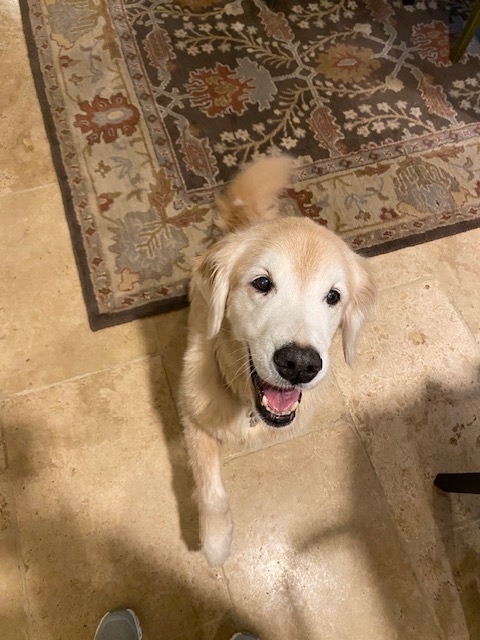
We believe in diversity, equity, and inclusion. We believe in access. We know the field isn’t level but think everyone should get to play—not just those with pedigrees and good breeding but also the scrappier ones who may have had a rougher start in life. This applies to institutions (community colleges as well as research universities), leaders (the Ivy-all-the-ways and those who came from less “traditional” backgrounds), and animal companions (we're not speciest). 


Roxy Snyder

Roxy Snyder, St. Clair County Community College (Michigan)

The Sandbox

Not your typical weekly newsletter. This is a space where presidents and chancellors can say what they really think without fear. Everyone is welcome to read, but only those who have been in the top job can submit to us. The Sandbox, by Rachel Toor, is an exclusive benefit of our paid Insider membership program.


The Sandbox Archive

The Real Text Messages of Lady Presidents

September 19, 2026

Retreat Rights

September 12, 2026

What Does a College Student Look Like?

August 29, 2026

Wackadoodle Newsletter Turns 3

August 22, 2026

Presidents: Quit Yer Whining

August 15, 2026
View All
Advertisement

Company

  • Contact Us
  • About Us
  • Work with Us
  • History
  • Meet the Team
  • Advertise
  • Subscriptions
  • Find a Job
  • Post a Job

Legal

  • Rights & Permissions
  • Privacy
  • Terms of Service
  • Do Not Sell or Share My Personal Information

Newsletter

Create a free account and get higher ed's most essential news, analysis, and career advice delivered to your inbox.

Copyright © 2026 Inside Higher Ed All rights reserved.

  • Menu
  • Insider Dashboard
  • My Account
  • Subscribe
  • Find a Job
  • News
  • Faculty
    • Contingent Faculty
    • Curriculum
    • Teaching
    • Learning & Assessment
    • Diversity & Equity
    • Career Development
    • Tenure
    • Retirement
    • Labor & Unionization
    • Shared Governance
    • Academic Freedom
    • Research
    • Books & Publishing
  • Students
    • Academics
    • Graduate students and Postdocs
    • Retention
    • Financial Aid
    • Careers
    • Residential Life
    • Athletics
    • Free Speech
    • Physical & Mental Health
    • Safety
  • Diversity
    • Race & Ethnicity
    • Sex & Gender
    • Socioeconomics
    • Religion
    • Disability
    • Age
  • Admissions
    • Traditional-Age
    • Adult & Post-Traditional
    • Transfer
    • Graduate
  • Tech & Innovation
    • Teaching & Learning
    • Artificial Intelligence
    • Digital Publishing
    • Data Analytics
    • Libraries
    • Administrative Tech
    • Alternative Credentials
  • Business
    • Financial Health
    • Cost-Cutting
    • Revenue Strategies
    • Academic Programs
    • Physical Campuses
    • Mergers & Collaboration
    • Fundraising
  • Institutions
    • Research Universities
    • Regional Public Universities
    • Community Colleges
    • Private Nonprofit Colleges
    • Minority-Serving Institutions
    • Religious Colleges
    • Women's Colleges
    • Specialized Colleges
    • For-Profit Colleges
  • Governance
    • Executive Leadership
    • Trustees & Regents
    • State Oversight
    • Accreditation
  • Government
    • Politics & Elections
    • Courts
    • Student Aid Policy
    • Science & Research Policy
    • State Policy
    • Colleges & Localities
  • Workplace
    • Employee Satisfaction
    • Remote & Flexible Work
    • Staff Issues
  • Global
    • Study Abroad
    • International Students in U.S.
    • U.S. Colleges in the World
  • Opinion
    • Opinion
  • Views
    • Intellectual Affairs
  • Career Advice
    • Seeking a Faculty Job
    • Advancing in the Faculty
    • Teaching
    • Seeking an Administrative Job
    • Advancing as an Administrator
    • Diversity
  • Columns
    • The Academic Worker
    • Beyond Transfer
    • Call to Action
    • Confessions of a Community College Dean
    • Debatable Ideas
    • Echoes in the Quad
    • Editor’s Note
    • Everything Is Fine
    • Just Visiting
    • Leadership in Higher Education
    • Learning Innovation
    • Online: Trending Now
    • The Public Scholar
    • Resident Scholar
    • Small World
    • Tough Love
  • Letters
  • Hubs
  • Student Success
    • Student Voice
    • Academic Life
    • Health & Wellness
    • The College Experience
    • Life After College
  • Special
  • Podcasts
    • The Key
    • Academic Minute
    • Campus
    • The Pulse
    • Weekly Wisdom
  • Reports & Data
  • Events
  • Quick Takes
  • Solutions
  • Institutional Subscriptions
  • Advertising & Marketing
  • Consulting Services
  • Data & Insights
  • Hiring & Jobs
  • Event Partnerships
  • Campus+
  • More
  • Post a Job
  • Campus
  • About
  • Contact Us